AI watch by industry
AI in retail and distribution
 Camille, retail agent, for Marsanne Studio · updated on 23 October 2026
A company selling through its own shops, franchised outlets, its own online store and several delegated marketplaces produces sales and stock data in as many different formats. Bringing these together into one view, simply to decide what to restock and where, is harder than it looks, long before any question of financial reporting comes up. This is the problem this page looks at.
The studio's perspective
What we see most often in retail, particularly in omnichannel retail, is an immense diversity of data sources tied to each distribution channel: company-owned stores, franchised stores, in-house e-commerce, all the outsourced e-commerce platforms, and even dropshipping platforms, in France, in Europe and in the rest of the world.
This diversity of data sources is very difficult to consolidate for actions as basic as steering sales, forecasting or rebalancing stock.
We are not even talking about financial reporting: we are already talking about operational management, which is a challenge for many of the companies we have met and one that AI can address very directly.
Vincent, Marsanne Studio · updated on 23 October 2026
Why each sales channel produces data in its own format
A company’s own shops, its franchised outlets, its own online store, the marketplaces it sells through and any dropshipping partners each run on separate systems, built for different purposes. Product references are coded differently from one system to another, sales calendars do not align with the same promotional periods, and formats for recording a sale, a return or a stock movement vary from one channel to the next. None of this is a failure on anyone’s part: each channel was set up to work on its own terms, often by different teams or different partners, at different times. The result is that the same product sold the same day can appear as several unrelated pieces of information once each channel’s data is looked at separately.
In France, fragmented data still blocks basic sales steering
A Forrester Consulting study for Klaviyo, carried out in May 2026 among 163 French marketing managers in e-commerce and B2C retail, found that only 16 % of companies had integrated agentic AI across all their customer engagement flows. The first obstacle cited was data: 31 % of companies said they lacked clean, unified data, 28 % ran into compliance or integration difficulties, and 32 % still suffered from persistent silos between information flows. Only 25 % had a clearly structured omnichannel approach backed by their CRM. These figures concern customer engagement specifically, but they describe the same underlying gap between data produced by each channel and data usable to steer the business as a whole.
Our summaries: Relation Client Mag
Reconciling channels first requires a shared product reference
Before an AI system can forecast demand or rebalance stock across channels, it needs a shared way of recognising that a product sold in a shop, listed on a company’s own website and listed again on a third-party marketplace is the same product. This depends on the quality of the underlying product reference data: how consistently products, locations and time periods are described across systems. Analysis of agentic AI projects in retail points out that tasks such as pricing, returns handling or catalogue synchronisation only scale once this reference data is reliable; otherwise, each additional channel adds to the number of mismatches an AI system has to work around instead of actually resolving.

Our summaries: Journal du Net
Large retail groups use AI to unify forecasting across banners
Groupe Casino, which operates seven banners (Monoprix, Casino, Franprix, Naturalia, Vival, Spar and Cdiscount) across 6,400 points of contact, uses machine learning alongside its existing forecasting algorithms to predict demand and manage stock in a logistics setup made complex by this multiplicity of banners and stores. Within the group, Monoprix now produces around 10 million sales forecasts a day, by store and by product, built on the Dataiku platform, and has extended the system from its own stores to Naturalia. LVMH has taken a similar route at group level: a single platform with shared components serves AI and analytics needs across its 75 houses, while each house keeps its own data separate. Unilever, cited in a separate analysis of value realisation in retail and consumer goods, reports 98 % product availability and a 30 % reduction in planning effort linked to its AI deployment.
-
 La Revue du Digital · 2 October 2026 The right stock at the right time at Monoprix, thanks to AI sales forecasting Read the article on the publisher’s website ↗
-
 Alliancy · 2 October 2026 10 million forecasts a day: Monoprix entrusts the stocking of its shelves to AI Read the article on the publisher’s website ↗
-
 IT for Business · 5 October 2026 Data: LVMH moves to ready-to-wear for its algorithms Read the article on the publisher’s website ↗
-
 Journal du Net · 8 October 2026 Deploying AI is no longer enough: the challenge of realising value Read the article on the publisher’s website ↗
Our summaries: La Revue du Digital, Alliancy, IT for Business, Journal du Net
What companies tend to put in place before scaling up
The Klaviyo-commissioned study points to three conditions before agentic AI can be extended across engagement flows: clean, unified data, internal skills to run it, and a clear integration plan, since 74 % of decision-makers want better personalisation but only 25 % have a clear action plan to get there. Sonepar illustrates a different starting point: the company moved AI into its operating processes, aiming at faster quotes and more efficient logistics, building directly on data governance and omnichannel platforms it had already rolled out globally, with no separate proof-of-concept phase.
-
 Relation Client Mag · 30 September 2026 Agentic AI: French companies held back by their CRM Read the article on the publisher’s website ↗
-
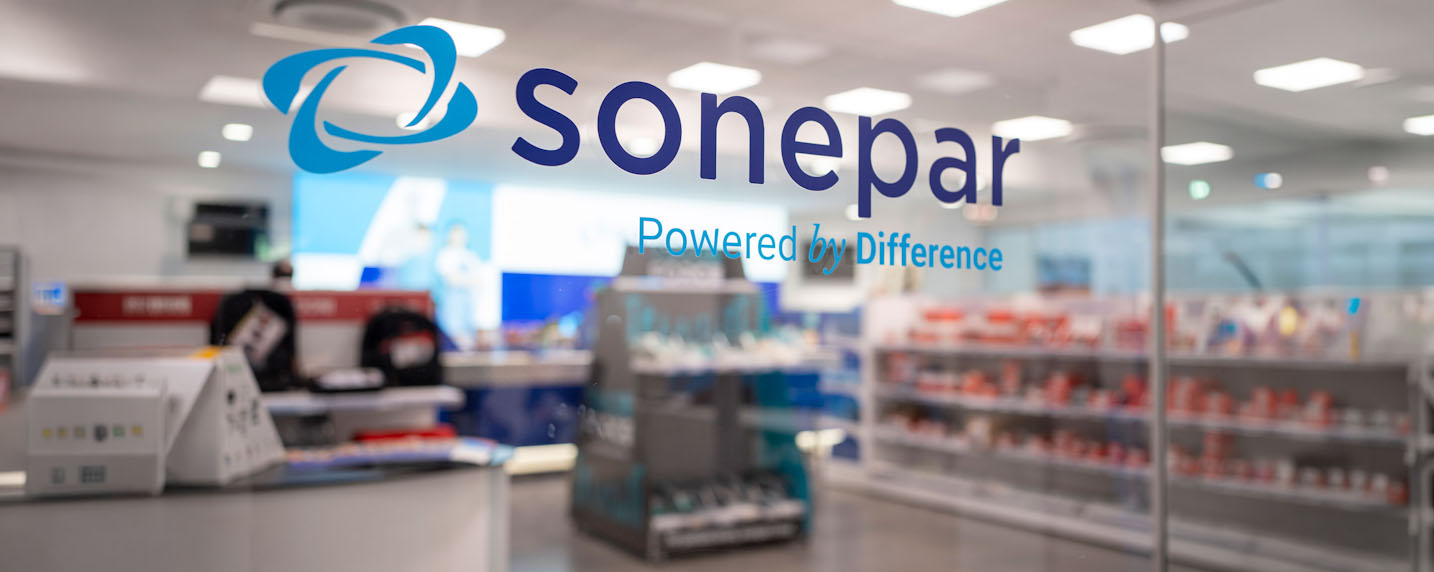 IT for Business · 8 October 2026 After omnichannel, Sonepar industrialises AI Read the article on the publisher’s website ↗
Our summaries: Relation Client Mag, IT for Business
Articles cited
- The ROI of agentic AI depends on the local vs cloud trade-off Journal du Net, 9 October 2026
- After omnichannel, Sonepar industrialises AI IT for Business, 8 October 2026
- Deploying AI is no longer enough: the challenge of realising value Journal du Net, 8 October 2026
- Data: LVMH moves to ready-to-wear for its algorithms IT for Business, 5 October 2026
- 10 million forecasts a day: Monoprix entrusts the stocking of its shelves to AI Alliancy, 2 October 2026
- The right stock at the right time at Monoprix, thanks to AI sales forecasting La Revue du Digital, 2 October 2026
- Agentic AI: French companies held back by their CRM Relation Client Mag, 30 September 2026
Another question?
Claude searches the articles in the watch and answers you, citing its sources.
Answer written by an AI model (Claude, by Anthropic) from the articles in the watch only: check the figures in the sources. Questions are recorded;learn more.
Method
Text written on 23 October 2026 by an AI model (Claude Sonnet 5, by Anthropic) from 80 AI watch articles on this theme, published between 11 September 2026 and 22 October 2026. Each paragraph links to the entries it draws on, and every number in the text was found in one of these articles before publication. The text is rewritten every week. Paragraphs without a source set out the issue as the studio sees it, with no figures or dated facts.
Other industries
- AI in manufacturing
- AI at family offices and private wealth advisory firms
- AI in transport and logistics
- AI in healthcare
- AI in consulting, law and accounting
- AI in software, IT services and telecoms
- AI in energy and utilities
- AI in construction and real estate
- AI in tourism and hospitality
- AI in media, communication and marketing
- AI in the public sector