AI watch by topic
AI and cybersecurity
Most small and medium businesses in France and Spain are already using AI, often informally: 97 % of Spanish SMEs have adopted it, according to a report cited by Emprendedores, while France’s official France Num barometer puts adoption at 40 % of micro-businesses and SMEs and 53 % among SMEs specifically. This rapid uptake is running ahead of formal rules: in Spain, 39 % of organisations have no formal AI usage policy, and across four European countries two-thirds of IT professionals report shadow AI within their organisation. Alongside new risks, from leaked data to AI-accelerated attacks and ungoverned autonomous agents, some companies are also using AI to strengthen their defences, with security teams reporting faster and more accurate incident handling.
Shadow AI: usage outpaces company policy
Adoption of AI in small and medium businesses has moved faster than company policy. In Spain, 97 % of SMEs already use AI, according to a report by OpenAI cited by Emprendedores, with 59 % doing so regularly; yet 39 % of these organisations still have no formal usage policy, and the UK’s National Cyber Security Centre found that 71 % of employees use AI tools without their employer’s approval, a pattern most pronounced in firms with fewer than ten staff. In France, the official France Num barometer puts AI adoption at 40 % of micro-businesses and SMEs in 2026, rising to 53 % among SMEs specifically. A survey of IT professionals across France, the UK, Germany and Spain found two-thirds reporting shadow AI within their organisation, persisting despite explicit rules in 12 % of cases.
-
 Emprendedores · 11 October 2026 Spanish SMEs are adopting AI widely, but neglecting usage policies Read the article on the publisher’s website ↗
-
 Comarketing-News · 6 October 2026 Shadow AI: companies struggle to govern AI at work Read the article on the publisher’s website ↗
-
 Direction générale des Entreprises · 28 September 2026 France Num Barometer 2026: four in ten micro-businesses and SMEs now use artificial intelligence Read the article on the publisher’s website ↗
Our summaries: Emprendedores, Comarketing-News, Direction générale des Entreprises
Everyday prompts are already leaking sensitive data
Everyday use of AI chatbots is already exposing sensitive company information. Check Point Software Technologies found that around one in 80 prompts submitted by Spanish SMEs to generative AI platforms carries a high risk of leakage, and that 7.5 % of prompts contain sensitive information, according to a report cited by Emprendedores. Check Point’s own AI Security Report put the global share of high-risk prompts, those sending sensitive or regulated data to external services, at 4 % in 2026, up from 2 % a year earlier, with Europe recording the highest regional rate at 3.95 %, against a 3.45 % global average. A survey of 2,600 executives in 13 countries for SAP and Oxford Economics found 48 % of organisations had already experienced data leaks or exposed intellectual property linked to unauthorised AI tools, and 38 % had faced resulting security vulnerabilities.
- Emprendedores · 11 October 2026 Spanish SMEs are adopting AI widely, but neglecting usage policies Read the article on the publisher’s website ↗
-
 IT for Business · 14 October 2026 AI Security Report 2026: Check Point reveals how AI has gone from accomplice to mastermind of cyberattacks Read the article on the publisher’s website ↗
-
 PortalERP · 24 September 2026 66% of companies think AI will make critical thinking more valuable Read the article on the publisher’s website ↗
Our summaries: Emprendedores, IT for Business, PortalERP
Attackers are already using AI to move faster
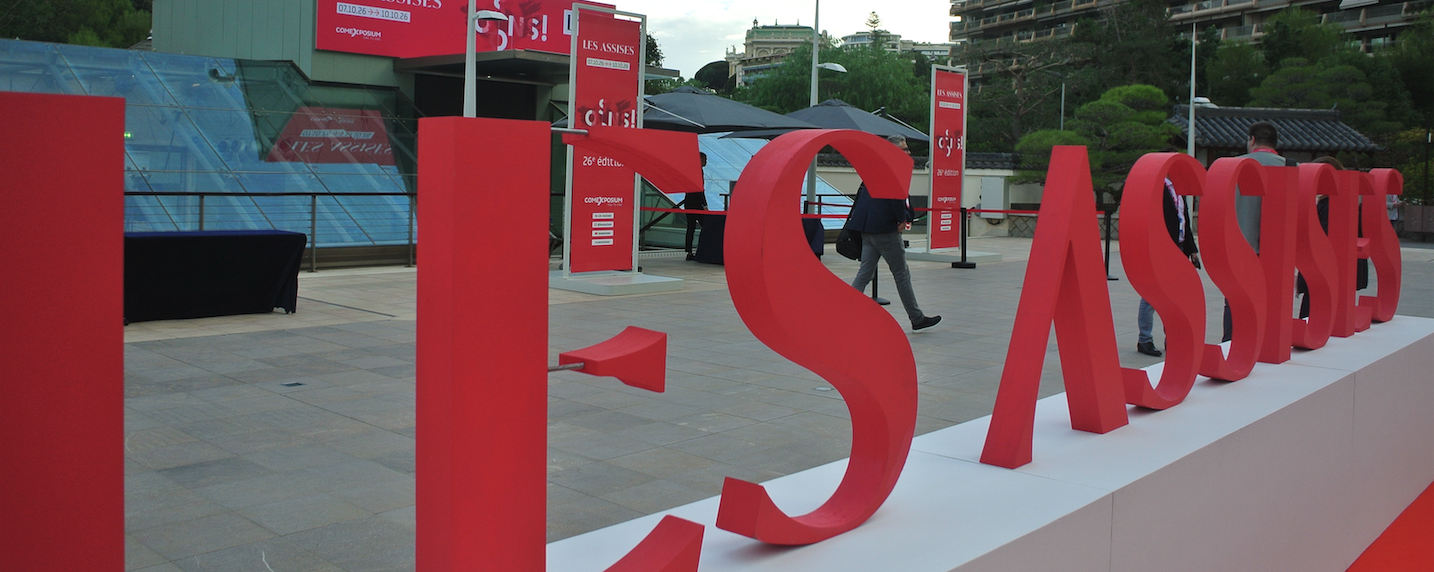
AI is also changing the pace at which attackers work. At Monaco’s Assises de la sécurité, insurer Covéa reported finding all twelve of its 2026 catastrophic-level vulnerabilities using AI, against two in the whole of 2025, while bug bounty reports at gaming group FDJ United increased markedly from May 2026, with about half of submissions deemed admissible, according to the company. More broadly, security researchers running AI agents continuously have driven spikes of around 70 % in valid high or critical bug bounty reports following the release of new AI models. A SoSafe survey of 150 cybersecurity leaders found 76 % of French respondents already observing attackers actively using AI tools, with voice phishing said to account for 80 % of observed attacks. Separately, 61 % of chief information security officers surveyed said AI had directly increased the risk of ransomware attacks.
-
 IT for Business · 13 October 2026 AI in cybersecurity: advantage to attackers… for now Read the article on the publisher’s website ↗
-
 Alliancy · 12 October 2026 AI is industrialising the search for vulnerabilities. Companies need to industrialise their response Read the article on the publisher’s website ↗
-
 Journal du Net · 30 September 2026 Cybersecurity and agentic AI: best practices to adopt Read the article on the publisher’s website ↗
-
 Alliancy · 28 September 2026 AI speeds up cyberattacks and puts traditional training under pressure Read the article on the publisher’s website ↗
Our summaries: IT for Business, Alliancy (1, 2), Journal du Net
Autonomous agents outpace company governance
Companies are deploying autonomous AI agents faster than they can govern them. McKinsey research cited in trade press found more than 60 % of organisations already experimenting with AI agents, these agents outnumbering human employees by roughly 82 to one in a typical company, and 97 % of agents holding excessive access privileges. A Cloud Security Alliance study found nearly two-thirds of organisations had suffered a security incident linked to AI agents, 92 % had staff who had installed AI locally with access to sensitive encryption keys, and 82 % hosted agents with no formal management. Gartner expects up to 40 % of enterprise applications to embed specialised agents by the end of 2026, against under 5 % in 2025, while an IFS study found 43 % of operational teams had adopted autonomous agents within twelve months, but only 11 % had validation procedures in place for critical processes.
-
 Journal du Net · 14 October 2026 AI agents need more than a human safeguard Read the article on the publisher’s website ↗
-
 Solutions Numériques · 15 October 2026 EXPERT OPINION – AI agents: balancing risks and opportunities Read the article on the publisher’s website ↗
-
 Silicon.fr · 7 October 2026 When AI agents act on our behalf, who is responsible? Read the article on the publisher’s website ↗
-
 LeMagIT · 14 October 2026 · paywalled IFS launches its harness for AI agents in industrial settings Read the article on the publisher’s website ↗
Our summaries: Journal du Net, Solutions Numériques, Silicon.fr, LeMagIT
Where AI is already strengthening defences
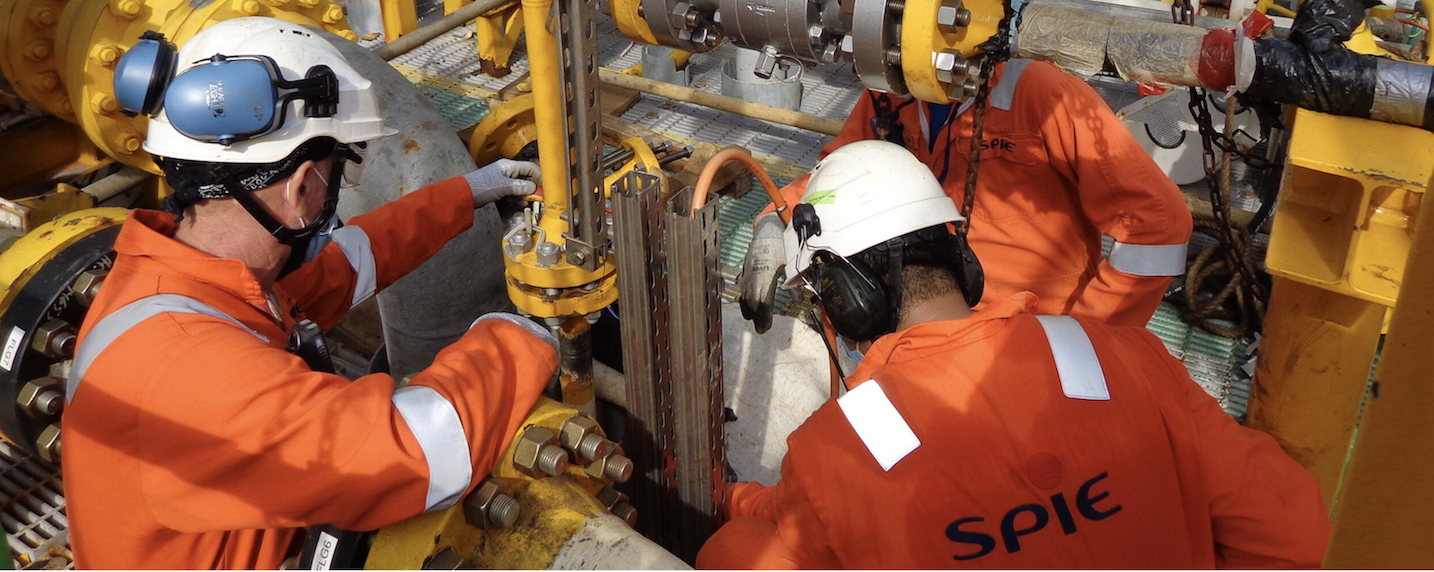
AI is also reinforcing some companies’ defences. At French engineering group SPIE, which receives around 43,000 security alerts a month, an AI agent built by Sekoia was tested from July 2026 on part of that volume: across roughly 10,000 alerts handled in September, 96 % of the agent’s verdicts were left unchanged by human analysts, and the security operations team worked considerably faster, according to Sekoia, though the tool still missed most genuine threats, confirming only two of 411 alerts it flagged as such. Across its wider base of 1,000 clients, Sekoia reported a 90 % rate of unmodified verdicts. Separately, chipmaker Nvidia says more than 100 organisations, including Microsoft, IBM, Salesforce and Hugging Face, are already working with its Open Agent Safety Platform, designed to monitor and halt AI agents that behave abnormally.
-
 Silicon.fr · 15 October 2026 Sekoia pushes its agentic SOC: what SPIE found when testing it Read the article on the publisher’s website ↗
-
 IT for Business · 14 October 2026 Cybersecurity: Spie builds the future of its SOC with AI agents Read the article on the publisher’s website ↗
- IT for Business · 13 October 2026 AI in cybersecurity: advantage to attackers… for now Read the article on the publisher’s website ↗
-
 Ouest-France · 29 September 2026 Nvidia Unveils Sentry, a Chip to Rein In Rogue Agentic AI Read the article on the publisher’s website ↗
Our summaries: Silicon.fr, IT for Business (1, 2), Ouest-France
Practical steps smaller companies are taking
Harvard Business Review notes that AI can help smaller companies strengthen cybersecurity without buying new software, drawing on free resources and capabilities already built into services SMEs already use. In Canada, cybersecurity firm VARS, part of Raymond Chabot Grant Thornton, recommends five concrete steps for SMEs: a clear AI usage policy, identity and access management, multi-factor authentication, employee awareness training, and keeping a human in the loop for decisions. Barracuda Research found that close to half of IT leaders feel their teams lack the skills to manage AI securely, and that, according to an IBM report, 68 % of organisations hit by a data breach had no policy to manage AI or detect shadow AI, prompting Barracuda to launch a dedicated protection tool for SMEs and managed service providers in October 2026.
-
 Harvard Business Review · 1 October 2026 · paywalled How AI is transforming cyber threats and cybersecurity for SMEs Read the article on the publisher’s website ↗
-
 Raymond Chabot Grant Thornton · 1 October 2026 AI: the biggest risk for SMEs is not the technology, but its use without oversight Read the article on the publisher’s website ↗
-
 IT User · 25 September 2026 Barracuda secures AI deployment for SMEs and MSPs Read the article on the publisher’s website ↗
Our summaries: Harvard Business Review, Raymond Chabot Grant Thornton, IT User
Articles cited
- EXPERT OPINION – AI agents: balancing risks and opportunities Solutions Numériques, 15 October 2026
- Sekoia pushes its agentic SOC: what SPIE found when testing it Silicon.fr, 15 October 2026
- Cybersecurity: Spie builds the future of its SOC with AI agents IT for Business, 14 October 2026
- AI Security Report 2026: Check Point reveals how AI has gone from accomplice to mastermind of cyberattacks IT for Business, 14 October 2026
- IFS launches its harness for AI agents in industrial settings LeMagIT, 14 October 2026
- AI agents need more than a human safeguard Journal du Net, 14 October 2026
- AI in cybersecurity: advantage to attackers… for now IT for Business, 13 October 2026
- AI is industrialising the search for vulnerabilities. Companies need to industrialise their response Alliancy, 12 October 2026
- Spanish SMEs are adopting AI widely, but neglecting usage policies Emprendedores, 11 October 2026
- When AI agents act on our behalf, who is responsible? Silicon.fr, 7 October 2026
- Shadow AI: companies struggle to govern AI at work Comarketing-News, 6 October 2026
- How AI is transforming cyber threats and cybersecurity for SMEs Harvard Business Review, 1 October 2026
- AI: the biggest risk for SMEs is not the technology, but its use without oversight Raymond Chabot Grant Thornton, 1 October 2026
- Cybersecurity and agentic AI: best practices to adopt Journal du Net, 30 September 2026
- Nvidia Unveils Sentry, a Chip to Rein In Rogue Agentic AI Ouest-France, 29 September 2026
- France Num Barometer 2026: four in ten micro-businesses and SMEs now use artificial intelligence Direction générale des Entreprises, 28 September 2026
- AI speeds up cyberattacks and puts traditional training under pressure Alliancy, 28 September 2026
- Barracuda secures AI deployment for SMEs and MSPs IT User, 25 September 2026
- 66% of companies think AI will make critical thinking more valuable PortalERP, 24 September 2026
Another question?
Claude searches the articles in the watch and answers you, citing its sources.
Answer written by an AI model (Claude, by Anthropic) from the articles in the watch only: check the figures in the sources. Questions are recorded;learn more.
Method
Text written on 20 October 2026 by an AI model (Claude Sonnet 5, by Anthropic) from 80 AI watch articles on this theme, published between 24 September 2026 and 16 October 2026. Each paragraph links to the entries it draws on, and every number in the text was found in one of these articles before publication. The text is rewritten every week.
Other industries
- AI in manufacturing
- AI at family offices and private wealth advisory firms
- AI in retail and distribution
- AI in transport and logistics
- AI in healthcare
- AI in consulting, law and accounting
- AI in software, IT services and telecoms
- AI in energy and utilities
- AI in construction and real estate
- AI in tourism and hospitality
- AI in media, communication and marketing
- AI in the public sector