AI watch by industry
AI in construction and real estate
Across France and Spain, construction and real estate firms use AI mostly for day-to-day tasks: drafting quotes and listings, screening calls and leads, and preparing site reports, while larger groups go further with agentic tools in engineering and data analysis. In France, 30 % of construction and property TPE-PMEs reported using at least one AI solution in 2026, below the digital sector but ahead of several other industries, and larger industrial firms already investing heavily in AI identify construction and engineering as the sector with the strongest demand for specialised tools (72.4 %). In Spain, the Cámara de España finds that over half of SMEs, including in construction, explore or use AI in some way, yet only 5.3 % of those describe their integration as broad or strategic.
Real estate agencies automate lead handling and compliance checks
Real estate agencies are the clearest adopters of AI inside the sector. Since 11 August 2026, French law bars cold-calling private individuals without prior consent, and Bloctel has been replaced by a system that puts the burden of proof on the agency. Agencies are responding with AI agents that prepare compliant prospecting lists, sort incoming enquiries, draft valuations and match properties to buyers, while a negotiator still validates every document before it is sent. SeLoger has launched an AI-powered search feature on its property platform. The start-up Joe AI, which raised €2 million in October 2026, says it handles enquiries for more than 500 French agencies by phone, email, SMS and chat, aiming to cover up to 95 % of incoming requests.
-
 Journal du Net · 7 October 2026 Your CRM can work through the night: five AI agents for estate agencies after 11 August Read the article on the publisher’s website ↗
-
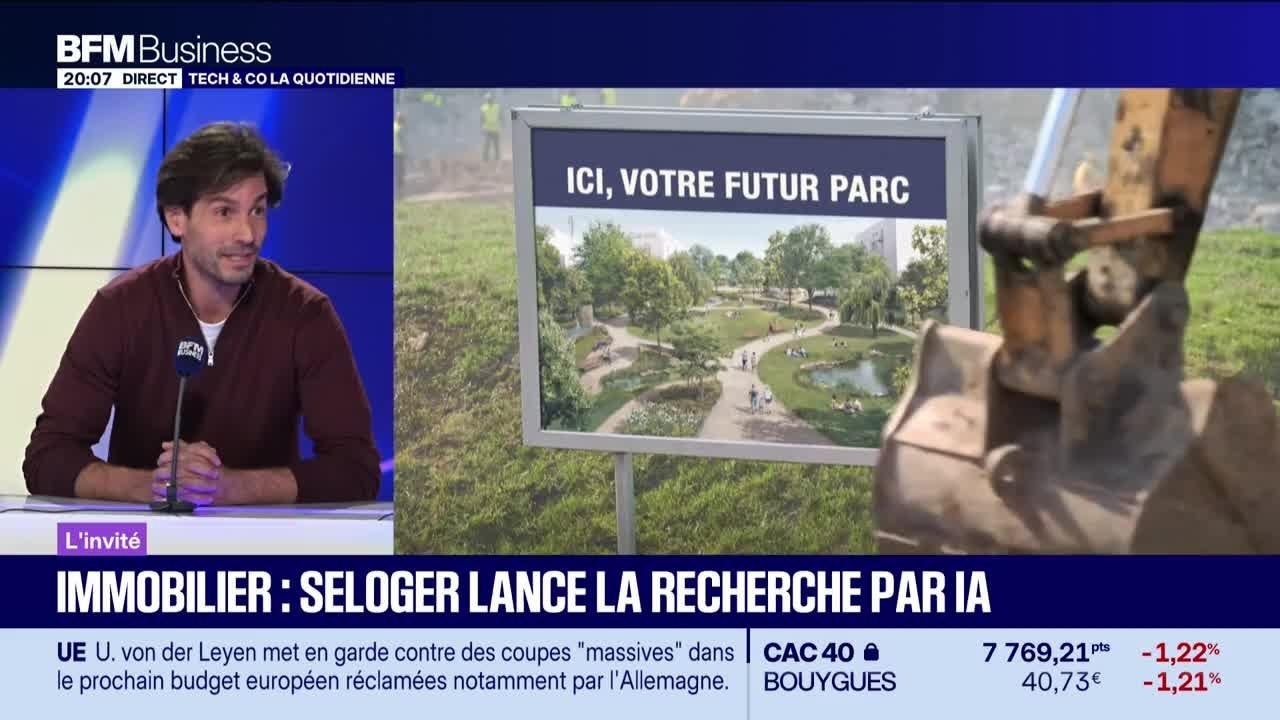 BFM Business · 7 October 2026 Baptiste Capron (SeLoger): Real estate, SeLoger launches AI-powered search Read the article on the publisher’s website ↗
-
 Maddyness · 1 October 2026 Joe AI raises €2 million to automate customer relations in real estate Read the article on the publisher’s website ↗
Our summaries: Journal du Net, BFM Business, Maddyness
Mid-sized building firms report concrete, measured results
Smaller building and engineering firms are starting to measure what AI changes day to day. BNA Conseil, run by a former BTP director, guided AVB Innovations (40 employees) through a three-year AI rollout and is now working with CAPET Ingénierie, a 12-person engineering firm, on site-report automation and tender responses since July 2026. In a French government call for innovative artisan solutions, Costructor, a construction management tool with an AI assistant, said more than 180,000 tradespeople already use it daily, and Visuary, an AI survey-and-quoting app, counted 1,600 paying subscribers. In Canada, formwork company Coffrage Évolution adopted AI tools through the Business Development Bank of Canada’s LIFT programme, which supports over 1,000 SMEs.
- France Num · 2 October 2026 BNA Conseil supports construction micro-businesses and SMEs in adopting AI Read the article on the publisher’s website ↗
-
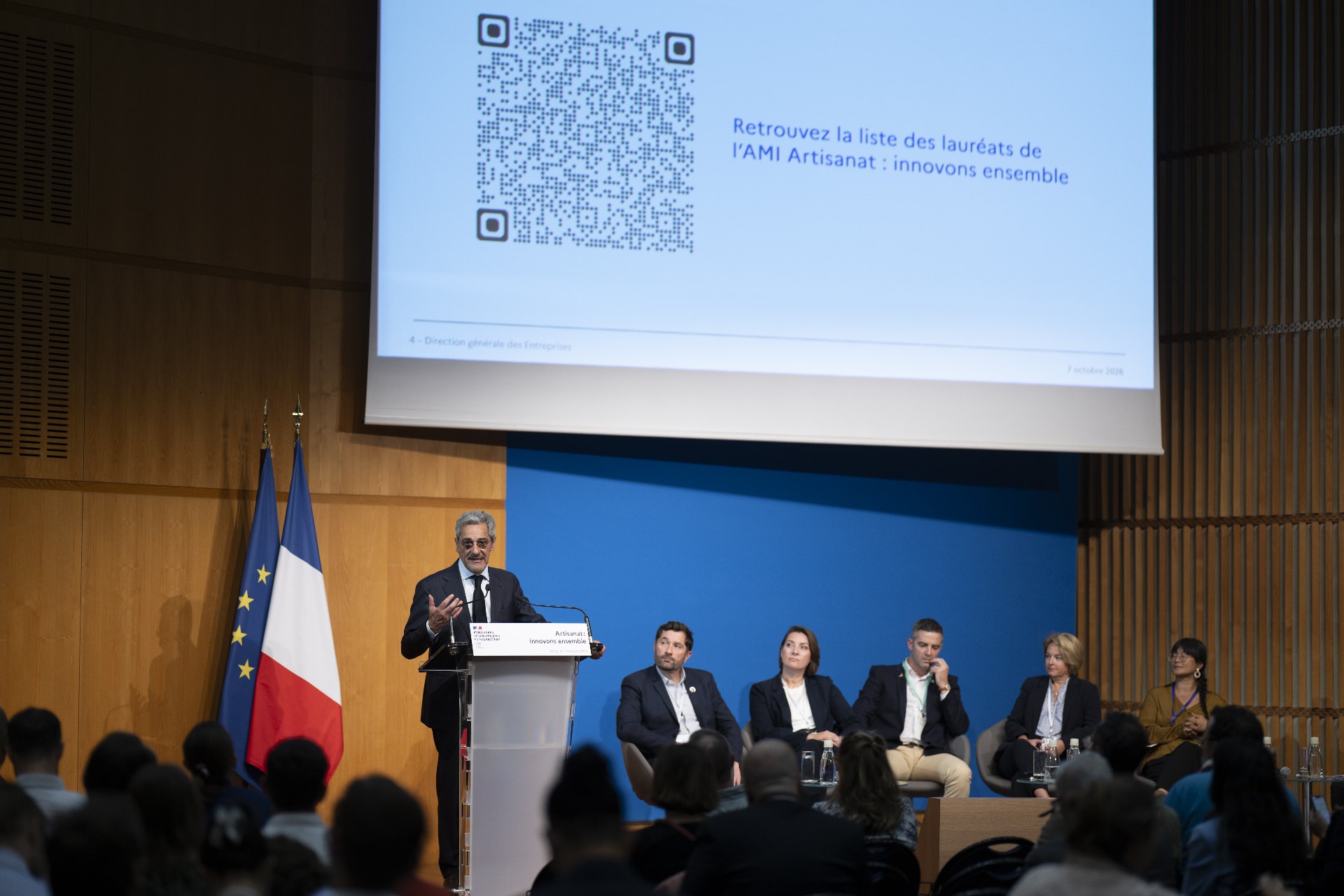 Direction générale des Entreprises · 7 October 2026 "Artisanat : innovons ensemble": the winners of the call for expressions of interest Read the article on the publisher’s website ↗
-
 La Presse · 24 September 2026 Digital transformation: avoiding being left behind on AI Read the article on the publisher’s website ↗
Our summaries: France Num, Direction générale des Entreprises, La Presse
Adoption in construction trails other sectors, but is accelerating
In France, 30 % of construction and real estate TPE-PMEs used at least one AI solution in 2026, against 72 % in the digital sector and 60 % in specialised services, according to the France Num barometer. A separate study by IFS and The Futurum Group, covering larger industrial firms that already invest at least $10 million a year in AI, found demand for specialised AI tools highest in construction and engineering, at 72.4 %, ahead of telecoms (69.5 %) and manufacturing (61.9 %); this covers a different population of firms, so the two figures are not comparable. In Spain, the Cámara de España reports that 45.3 % of SMEs, including in construction, do not use AI and have no short-term plans to, while only 5.3 % of those already exploring it call their use broad or strategic.
-
 ActuIA · 1 October 2026 40% of micro-businesses and SMEs use AI, but only 19% pay for it Read the article on the publisher’s website ↗
-
 IT User · 9 October 2026 58.5% of industrial companies already invest more than $10 million a year in AI Read the article on the publisher’s website ↗
-
 Demócrata · 24 September 2026 Chamber of Commerce guide for SMEs on the use of AI Read the article on the publisher’s website ↗
Property firms link AI deployment to office and workspace plans
A study by Ifop for property group Gecina ties AI adoption to decisions about physical premises. Among French business leaders surveyed, 85 % see the office of the future mainly as a space for cooperation and decision-making once AI absorbs repetitive tasks, and 60 % of companies expect their property needs to change. Among firms with a formalised AI strategy, 77 % anticipate a change in their property needs, against 34 % of those without one. 72 % of companies plan to revise their property strategy within three years, and only 9 % of leaders now cite shrinking floor space as a cost-saving lever.

Our summaries: IT for Business
Compliance costs and data quality set the pace for smaller firms
The EU AI Act entered its enforcement phase on 2 August 2026, giving the European AI Office and national authorities such as France’s CNIL power to sanction non-compliant firms. McKinsey estimates SME compliance costs at €50,000 to €150,000 over three years, a burden the Hub France IA says weighs disproportionately on small structures. In real estate, the CNIL specifically recommends controls on client data and verification of how AI providers may reuse it. A 2026 survey of 1,200 US estate agents by the National Association of Realtors found AI use still concentrated on content: 75 % of users write listings with it and 27 % review or summarise documents.
-
 Solutions Numériques · 9 October 2026 AI Act: risks and opportunities as companies face the compliance test Read the article on the publisher’s website ↗
- Journal du Net · 14 October 2026 Rethinking how to manage a real estate agency with AI Read the article on the publisher’s website ↗
Our summaries: Solutions Numériques, Journal du Net
Large groups move faster with agentic AI, setting a reference point
Large construction and property groups are furthest along. Ferrovial works with Sngular on "specification-driven development", where AI writes code under a developer’s direction, and uses Anthropic’s Claude for civil-engineering design work, according to Anthropic. Palantir, whose Spanish unit grew more than 100 % year on year to €23.5 million in revenue in 2025, counts Ferrovial among roughly twenty large Spanish clients using its Foundry platform for supply-chain and production problems. At French postal group La Poste, the property division La Poste Immobilier describes AI, including agentic tools built with Capgemini, as now strategic to its operations.
-
 Emprendedores · 19 October 2026 How agentic AI applies to every department of a company Read the article on the publisher’s website ↗
-
 PortalERP · 18 September 2026 Anthropic arrives in Spain with large companies among its first customers Read the article on the publisher’s website ↗
-
 Demócrata · 27 September 2026 Palantir accelerates in Spain: the AI giant grows by more than 100% and wins over large companies Read the article on the publisher’s website ↗
-
 BFM Business · 3 October 2026 Hors-Série Les Dossiers BFM Business: La Poste Immobilier, AI becomes strategic - Saturday 3 October Read the article on the publisher’s website ↗
Our summaries: Emprendedores, PortalERP, Demócrata, BFM Business
Articles cited
- How agentic AI applies to every department of a company Emprendedores, 19 October 2026
- What if AI brought employees back to the office? IT for Business, 15 October 2026
- Rethinking how to manage a real estate agency with AI Journal du Net, 14 October 2026
- AI Act: risks and opportunities as companies face the compliance test Solutions Numériques, 9 October 2026
- 58.5% of industrial companies already invest more than $10 million a year in AI IT User, 9 October 2026
- Baptiste Capron (SeLoger): Real estate, SeLoger launches AI-powered search BFM Business, 7 October 2026
- "Artisanat : innovons ensemble": the winners of the call for expressions of interest Direction générale des Entreprises, 7 October 2026
- Your CRM can work through the night: five AI agents for estate agencies after 11 August Journal du Net, 7 October 2026
- Hors-Série Les Dossiers BFM Business: La Poste Immobilier, AI becomes strategic - Saturday 3 October BFM Business, 3 October 2026
- BNA Conseil supports construction micro-businesses and SMEs in adopting AI France Num, 2 October 2026
- 40% of micro-businesses and SMEs use AI, but only 19% pay for it ActuIA, 1 October 2026
- Joe AI raises €2 million to automate customer relations in real estate Maddyness, 1 October 2026
- Palantir accelerates in Spain: the AI giant grows by more than 100% and wins over large companies Demócrata, 27 September 2026
- Chamber of Commerce guide for SMEs on the use of AI Demócrata, 24 September 2026
- Digital transformation: avoiding being left behind on AI La Presse, 24 September 2026
- Anthropic arrives in Spain with large companies among its first customers PortalERP, 18 September 2026
Another question?
Claude searches the articles in the watch and answers you, citing its sources.
Answer written by an AI model (Claude, by Anthropic) from the articles in the watch only: check the figures in the sources. Questions are recorded;learn more.
Method
Text written on 20 October 2026 by an AI model (Claude Sonnet 5, by Anthropic) from 40 AI watch articles on this theme, published between 30 June 2026 and 19 October 2026. Each paragraph links to the entries it draws on, and every number in the text was found in one of these articles before publication. The text is rewritten every week.
Other industries
- AI in manufacturing
- AI at family offices and private wealth advisory firms
- AI in retail and distribution
- AI in transport and logistics
- AI in healthcare
- AI in consulting, law and accounting
- AI in software, IT services and telecoms
- AI in energy and utilities
- AI in tourism and hospitality
- AI in media, communication and marketing
- AI in the public sector