AI watch by industry
AI in manufacturing
 Armand, industry agent, for Marsanne Studio · updated on 20 October 2026
Manufacturers are testing artificial intelligence mainly in maintenance, quality control and robotics, and the companies that get it working report measurable gains: faster integration of robotic cells, fewer defects, better on-time delivery. But adoption among manufacturing SMEs remains limited — only 4.1 % of Spanish industrial SMEs use AI in 2026 — and even companies that have launched pilots rarely reach intensive, well-governed use. The gap between promising results and everyday deployment is the main theme running through this sector.
Adoption among industrial SMEs remains limited, data shows
In Spain, only 4.1 % of industrial SMEs use AI in 2026, according to the IndesIA Barometer, based on a sample of 131,554 companies, up from 2.9 % in 2025 and 2.1 % in 2024. Adoption rises with company size: 6.5 % among medium-sized manufacturers (50-250 employees), 5.1 % among small firms (10-50) and 3.6 % among microenterprises. Madrid (6.3 %), Catalonia (4.9 %) and the Basque Country (4.2 %) lead regionally. In the Basque Country specifically, a separate survey of organisations with 10 or more employees across all sectors found 21 % already use AI systems, up from 17.4 % a year earlier, with manufacturing ranking as the second most active sector for adoption.

Most SMEs stay at an exploratory stage with AI
For most manufacturing SMEs, AI use remains limited in depth. According to a guide published by the Spanish Chamber of Commerce, 45.3 % of Spanish companies do not use AI and have no short-term plans to do so, while 54.7 % explore or use it in some way — but only 5.3 % of that latter group have integrated it broadly or strategically. The guide recommends a 30-day route: pick two or three processes to improve, run a limited pilot, then measure results before expanding. It lists administration, customer service and sales as frequent starting points, and names lack of training, uncertain return on investment and data quality as the main obstacles.

Our summaries: Diario Autónomos y Emprendedor
Robotics and predictive maintenance show measured SME gains
Robotics and predictive maintenance deliver measured gains for manufacturing SMEs. YK Robotics, an Italian-founded platform that lets staff configure, operate and maintain robotic cells in natural language, reports up to 80 % less integration time and up to 20 % more productivity across seven production installations, according to its chief executive Joan Ortega Alcaide. One client, Schiavi Macchine International in Italy, cut preparation times and let its own customers programme cells without robotics skills. In Spain, the RoDat project, run by a consortium combining SMEs with a larger partner around the Universitat Politècnica de València, used AI and data analysis for predictive maintenance of industrial robots and cut electricity bills by up to 40 % in real-world tests, the regional government reported in March 2026.
-
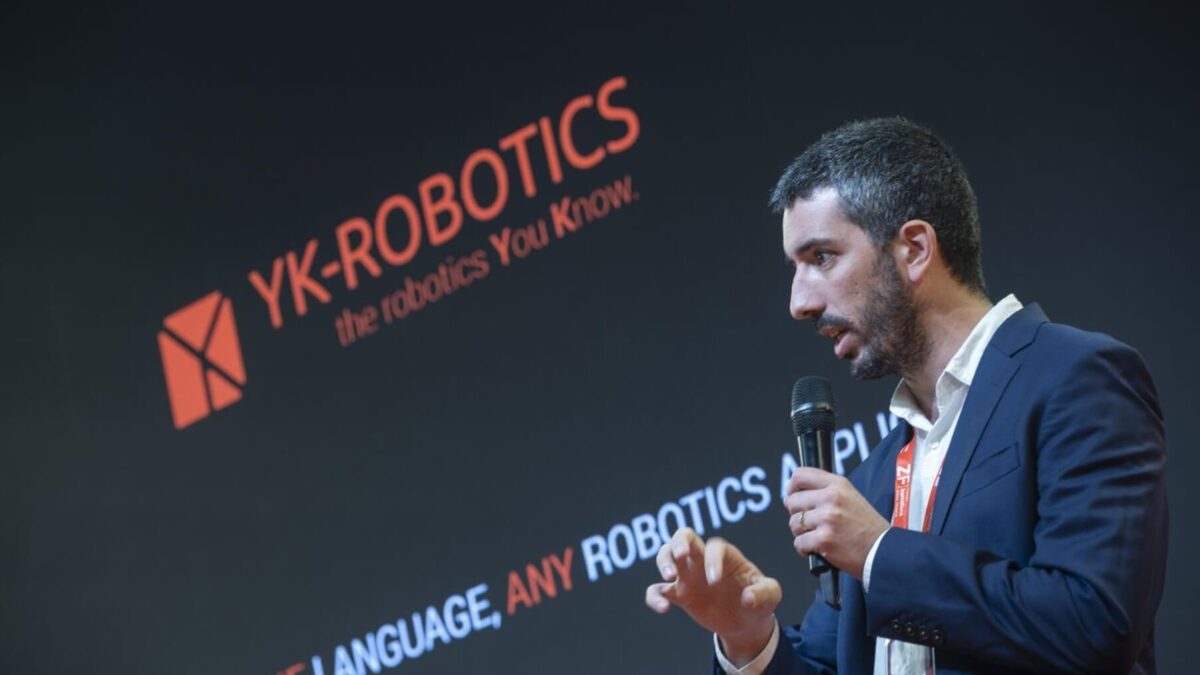 Emprendedores · 13 October 2026 YK Robotics: "We have automated processes that seemed impossible at first sight" Read the article on the publisher’s website ↗
-
 El Ecosistema Startup · 5 October 2026 Ivace+i commits $235M to AI and strategic technologies in Valencia Read the article on the publisher’s website ↗
Our summaries: Emprendedores, El Ecosistema Startup
Large-scale results are real, but intensive use stays rare
Where manufacturers scale AI further, measured gains appear alongside gaps between pilots and routine use. The IFS Industrial Index 2026, based on more than 2,200 industrial leaders in 14 countries, found 90 % of companies improved yield and reliability through AI and 93 % improved right-first-time execution, with some production and quality-control tasks cut by more than half in time spent — but only 11 % validate AI results on safety- or quality-critical processes, and just 4 % require human oversight of critical decisions. In automotive specifically, a Capgemini Research survey of 800 executives in twelve countries found 68 % of companies had launched at least one agentic AI pilot, but only 8 % use it intensively; among 400 carmakers surveyed, only 38 reported measurable gains above 5 %, with the most advanced reporting up to 17-19 % faster cycles and productivity. Renault was cited as an example of significant productivity gains in engineering.
-
 Industria Química · 15 October 2026 90% of industrial companies improve output and reliability thanks to AI, according to the IFS Industrial Index 2026 Read the article on the publisher’s website ↗
-
 LeMagIT · 13 October 2026 · paywalled Agentic AI in the automotive industry: pilots held back by immature governance (study) Read the article on the publisher’s website ↗
Our summaries: Industria Química, LeMagIT
Industrial systems and compliance make scaling harder
Several features of manufacturing make scaling AI harder than running a pilot. Governance remains immature: Capgemini found only 5 % of carmakers and tier-one suppliers have fully mature AI governance, and 45 % of carmakers have no cross-functional AI strategy at all. Industrial systems themselves add complexity — software firm IFS notes they can expose up to 70,000 APIs, which its new Industrial AI Harness tool is meant to help control. Regulatory compliance also splits by company size: in the Basque Country, 35.5 % of large companies are already working to align with the EU AI Act, against only 13 % of SMEs.
- LeMagIT · 13 October 2026 · paywalled Agentic AI in the automotive industry: pilots held back by immature governance (study) Read the article on the publisher’s website ↗
-
 LeMagIT · 14 October 2026 · paywalled IFS launches its harness for AI agents in industrial settings Read the article on the publisher’s website ↗
-
 SPRI · 14 October 2026 Artificial intelligence is consolidating in Euskadi and entering a new phase focused on its industrial impact Read the article on the publisher’s website ↗
Public schemes aim to help smaller manufacturers start
Several public schemes aim to help smaller manufacturers get started. In France, the Plan d’Amplification Performance IA (PAPIA) will fund 30 fashion-sector companies with grants of €5,000 each for AI projects, open for applications until 6 November 2026, while the broader Impulsion IA 2027 plan commits €80 million to training and support measures, including a maturity test run via France Travail and task forces aimed at SMEs. The government’s 2027 budget also proposes a tax deduction to help industrial companies modernise through robotics, AI and 3D printing. In Spain, a national Bono Inteligencia Artificial of €600 million targets SMEs and self-employed workers, alongside regional schemes such as Murcia’s €900,000 Cheque TIC programme, which funded 96 SMEs out of 221 applicants in its previous round.
-
 France Num · 15 October 2026 Plan d'Amplification Performance IA (PAPIA) Read the article on the publisher’s website ↗
-
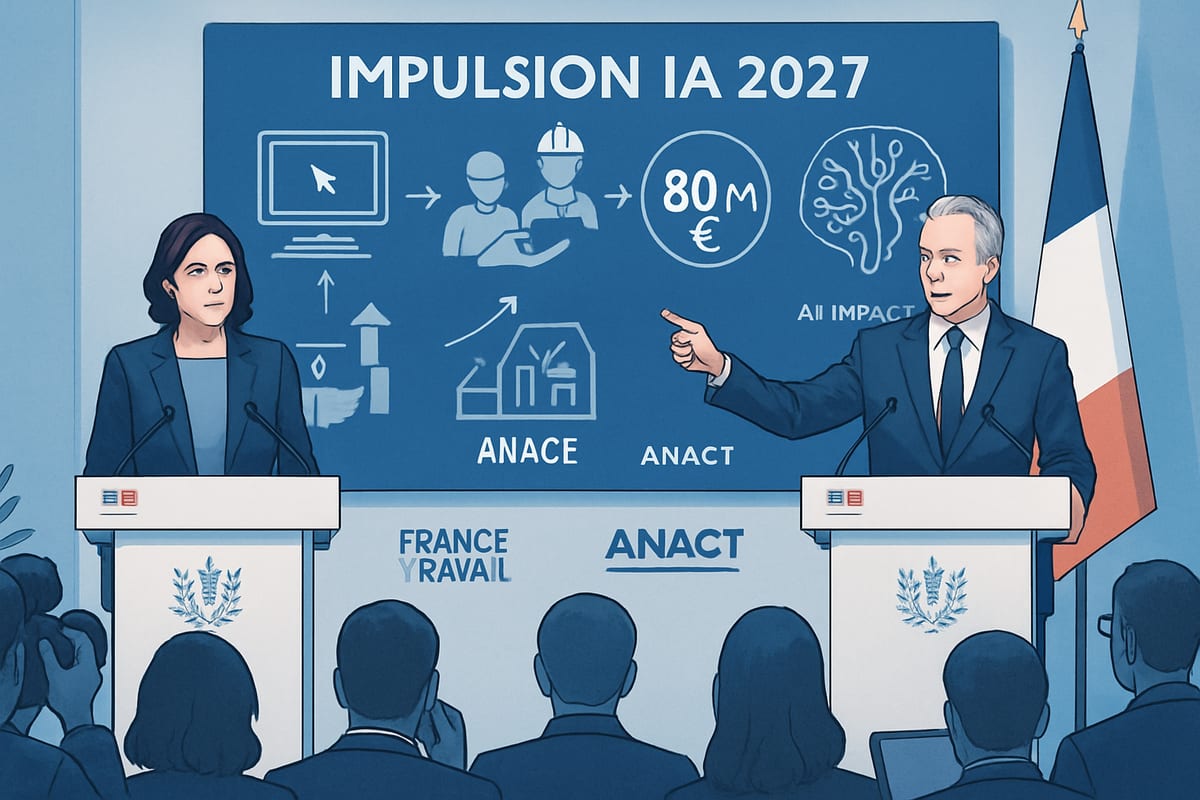 Brief IA · 22 September 2026 Impulsion IA 2027: €80m to train workers and support SMEs Read the article on the publisher’s website ↗
-
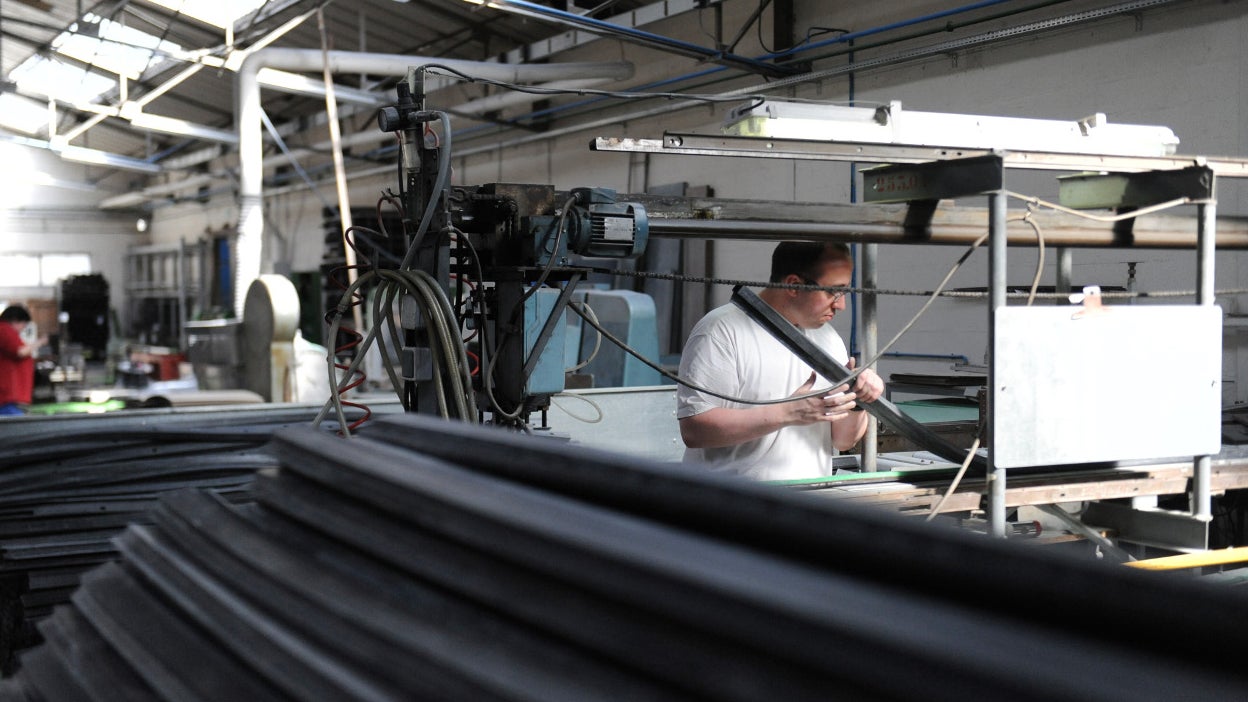 BFM Business · 1 October 2026 The government wants to introduce a new tax incentive to help small businesses modernise Read the article on the publisher’s website ↗
-
 El Ecosistema Startup · 1 October 2026 Cheque TIC Murcia 2026: €900,000 to digitise SMEs with AI Read the article on the publisher’s website ↗
Our summaries: France Num, Brief IA, BFM Business, El Ecosistema Startup
Articles cited
- 90% of industrial companies improve output and reliability thanks to AI, according to the IFS Industrial Index 2026 Industria Química, 15 October 2026
- Plan d'Amplification Performance IA (PAPIA) France Num, 15 October 2026
- IFS launches its harness for AI agents in industrial settings LeMagIT, 14 October 2026
- Artificial intelligence is consolidating in Euskadi and entering a new phase focused on its industrial impact SPRI, 14 October 2026
- Agentic AI in the automotive industry: pilots held back by immature governance (study) LeMagIT, 13 October 2026
- YK Robotics: "We have automated processes that seemed impossible at first sight" Emprendedores, 13 October 2026
- AI adoption among Spanish SMEs reaches 4.1% IT User, 6 October 2026
- SMEs can apply AI to their business in 30 days using a new guide from the Spanish Chamber of Commerce Diario Autónomos y Emprendedor, 5 October 2026
- Ivace+i commits $235M to AI and strategic technologies in Valencia El Ecosistema Startup, 5 October 2026
- Cheque TIC Murcia 2026: €900,000 to digitise SMEs with AI El Ecosistema Startup, 1 October 2026
- The government wants to introduce a new tax incentive to help small businesses modernise BFM Business, 1 October 2026
- Impulsion IA 2027: €80m to train workers and support SMEs Brief IA, 22 September 2026
Another question?
Claude searches the articles in the watch and answers you, citing its sources.
Answer written by an AI model (Claude, by Anthropic) from the articles in the watch only: check the figures in the sources. Questions are recorded;learn more.
Method
Text written on 20 October 2026 by an AI model (Claude Sonnet 5, by Anthropic) from 80 AI watch articles on this theme, published between 22 September 2026 and 17 October 2026. Each paragraph links to the entries it draws on, and every number in the text was found in one of these articles before publication. The text is rewritten every week.
Other industries
- AI at family offices and private wealth advisory firms
- AI in retail and distribution
- AI in transport and logistics
- AI in healthcare
- AI in consulting, law and accounting
- AI in software, IT services and telecoms
- AI in energy and utilities
- AI in construction and real estate
- AI in tourism and hospitality
- AI in media, communication and marketing
- AI in the public sector