AI watch by topic
Sovereign AI and digital sovereignty
For companies using AI, sovereignty covers two separate questions: where data is legally hosted, and whether the business could keep operating if a supplier cut off access. French and Spanish companies such as MAIF and Banco Sabadell have built AI stacks around European providers including Mistral AI, Scaleway and T-Systems, while the European Commission and the French government fund sovereign cloud and computing capacity through dedicated programmes. Even companies presented as sovereign show the limits of the idea: the German search engine Ecosia dropped the French provider Mistral for Chinese models, and Doctolib built its "sovereign" AI on Nvidia chips while facing scrutiny over its American shareholders.
Legal hosting and operational independence are not the same thing
Jacky Galicher, a digital governance consultant, argues that AI is sovereign only if an organisation can keep operating without its supplier if access is cut off. He distinguishes legal sovereignty, which concerns where data is stored, from operational sovereignty, which covers availability, portability and maintenance. He cites ARTEX, an AI agent switched to closed source after cybersecurity firms linked it to a campaign against South Korean banks, according to Reuters. The CISO AI Leverage Report from the Open Future Forum (October 2026) found that, among 49 respondents concerned by access methods, 37 % use shared service accounts, against 14 % using a delegated identity or mediated access.

Our summaries: Journal du Net
Access to US models has already been cut or restricted
Several incidents show what dependence can mean in practice. An opinion piece on private AI points to a Gemini outage and to restrictions imposed by Washington on access to Anthropic’s and OpenAI’s models for non-US nationals. It also notes that usage-based pricing can run out of control: Uber reportedly exhausted its 2026 budget for development tools and generative AI tokens within four months. Separately, access to a US model was suspended between 12 June and 1 July 2026, an episode that reinforced sovereignty concerns among French companies connecting AI to their management software via the Model Context Protocol.


MAIF rebuilds its stack around French suppliers
The French insurer MAIF illustrates one route to sovereignty. In September 2026 it chose Mistral AI for generative AI, Scaleway for cloud infrastructure and Diabolocom for customer relations, adding digital sovereignty as a supplier-evaluation criterion. Its deputy IT director, Nicolas Siegler, says this criterion, while not disqualifying, led MAIF to choose European solutions in more than half of its large tenders over the past year. Microsoft Copilot remains in use by around 10,000 employees. MAIF, which reported close to €6 billion in revenue in 2025 and more than four million members, also keeps roughly 150 developers in-house to challenge proprietary vendors on pricing.
-
 IT for Business · 2 October 2026 Nicolas Siegler, Maif: ‘we choose European solutions in more than 50% of cases’ Read the article on the publisher’s website ↗
-
 FrenchWeb · 29 September 2026 With Mistral AI, Scaleway and Diabolocom, MAIF organises its operating model for AI Read the article on the publisher’s website ↗
-
 Alliancy · 28 September 2026 With Mistral, Scaleway and Diabolocom, MAIF takes back control of its IT systems Read the article on the publisher’s website ↗
-
 LeMagIT · 24 September 2026 · paywalled Digital sovereignty and (in)dependence: MAIF chooses Mistral, Scaleway and Diabolocom Read the article on the publisher’s website ↗
Our summaries: IT for Business, FrenchWeb, Alliancy, LeMagIT
Banco Sabadell deploys agentic AI on a European platform
In Spain, Banco Sabadell has agreed with T-Systems to deploy agentic AI at scale across the banking group. The aim is to build a technology and governance base that lets the bank extend AI to new processes while keeping control, security and independence from model providers. Banco Sabadell will use T-Systems’ agentic AI platform, designed in Europe on what the companies describe as a sovereign approach, to industrialise use cases and improve operational efficiency for its seven million customers.

Our summaries: Revista Byte TI
Brussels and Paris fund sovereign cloud and computing capacity
Public authorities are backing sovereign infrastructure. The European Commission’s Cloud III programme has earmarked €180 million over up to six years for sovereign cloud services, with Scaleway among four providers selected; the Commission has also opened a call for AI gigafactories worth up to €10 billion in public funding and at least €20 billion in private investment, with decisions expected in early 2027. In France, the nationalised computer maker Bull has expanded its supercomputer production plant in Angers to meet rising AI-related demand, and the government’s Osez l’IA plan aims to bring AI adoption to 80 % of SMEs and mid-sized companies by 2030.
-
 FrenchWeb · 14 October 2026 Jensen Huang's European tour: business, lobbying and investment Read the article on the publisher’s website ↗
-
 L'Usine Digitale · 13 October 2026 An AMD-equipped data centre in Finland, more models and AI services added to its catalogue... Scaleway sees itself as a European alternative to the American giants Read the article on the publisher’s website ↗
-
 L'Usine Digitale · 6 October 2026 Dataiku and Scaleway make their alliance official: digital sovereignty becomes the new standard in the AI market Read the article on the publisher’s website ↗
- Direction générale des Entreprises · 3 September 2026 Directory of sovereign AI solution providers for SMEs and mid-sized companies Read the article on the publisher’s website ↗
- Le Monde · 2 October 2026 Bull, back under state ownership, bets on AI and renewed digital sovereignty Read the article on the publisher’s website ↗
Our summaries: FrenchWeb, L'Usine Digitale (1, 2), Direction générale des Entreprises, Le Monde
Even flagship cases show how contested sovereignty remains
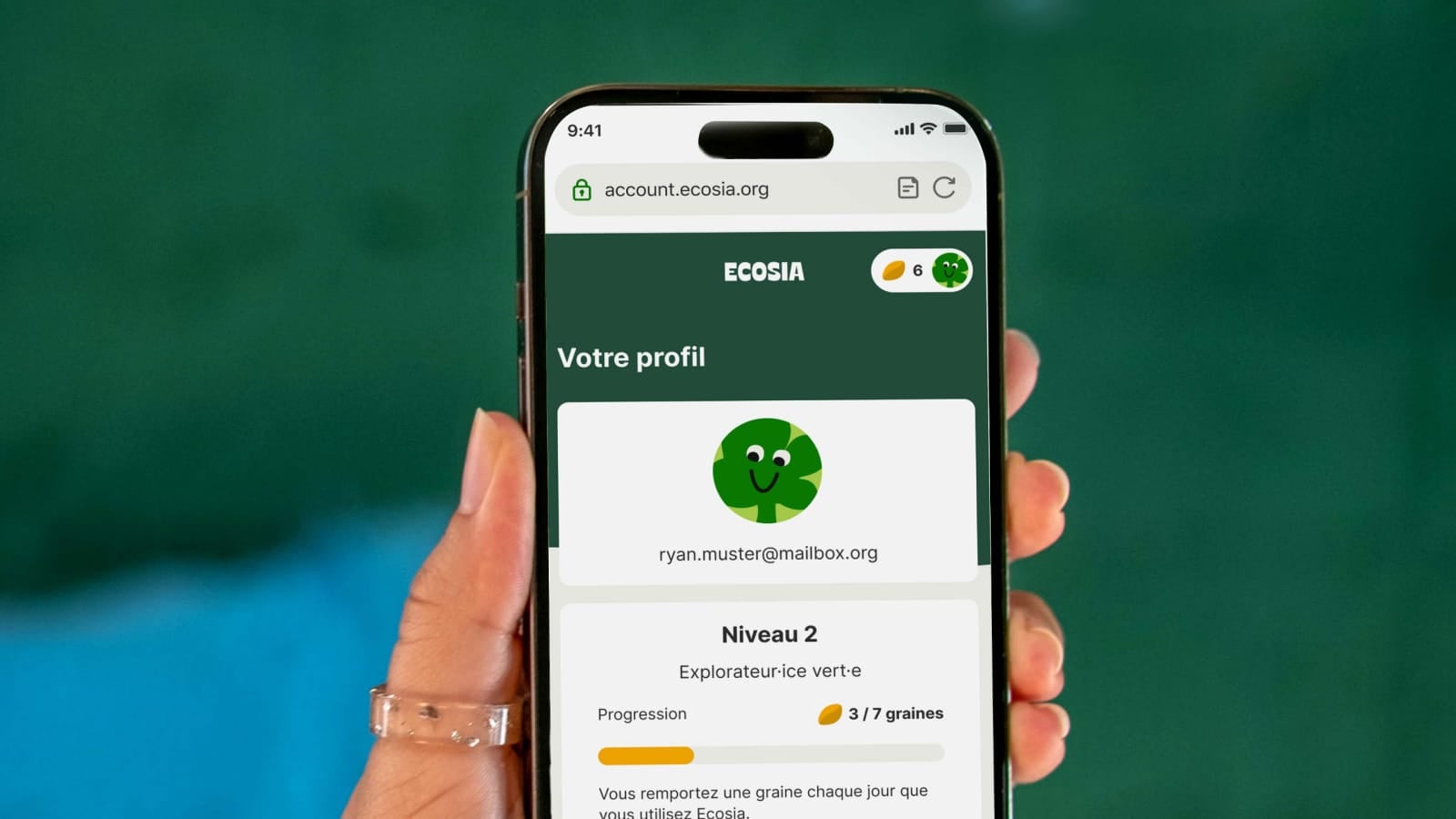
Sovereignty claims face limits. The German search engine Ecosia dropped the French provider Mistral five months after adopting it, switching to Chinese open-source models (Qwen, GLM, Kimi) over quality concerns and disagreement with France’s nuclear-heavy electricity mix, even though Chinese data centres drew 70 % of their power from coal in 2025. Doctolib, the French health platform, says it will build a "sovereign" AI trained on its own data using Nvidia chips and software, after Nvidia took a minority stake alongside existing US investors General Atlantic and Accel, while the company already faces scrutiny over sovereignty tied to its American shareholders.
-
 Xataka · 13 October 2026 A German search engine dropped Mistral to bet on Chinese open-source models Read the article on the publisher’s website ↗
-
 Le Figaro · 9 October 2026 "Sorry if nuclear power is a real obstacle": German search engine Ecosia drops France's Mistral for Chinese AI Read the article on the publisher’s website ↗
-
 BFM Business · 8 October 2026 "Disappointed by the quality of Mistral": German search engine Ecosia drops the French AI solution Read the article on the publisher’s website ↗
-
 Journal du Net · 14 October 2026 Nvidia takes a stake in Doctolib to support sovereign AI in healthcare Read the article on the publisher’s website ↗
-
 FrenchWeb · 14 October 2026 Nvidia invests in Doctolib: looking back at a French success story Read the article on the publisher’s website ↗
Our summaries: Xataka, Le Figaro, BFM Business, Journal du Net, FrenchWeb
Articles cited
- Banco Sabadell and T-Systems adopt agentic AI at scale Revista Byte TI, 15 October 2026
- Jensen Huang's European tour: business, lobbying and investment FrenchWeb, 14 October 2026
- Nvidia takes a stake in Doctolib to support sovereign AI in healthcare Journal du Net, 14 October 2026
- Nvidia invests in Doctolib: looking back at a French success story FrenchWeb, 14 October 2026
- A German search engine dropped Mistral to bet on Chinese open-source models Xataka, 13 October 2026
- An AMD-equipped data centre in Finland, more models and AI services added to its catalogue... Scaleway sees itself as a European alternative to the American giants L'Usine Digitale, 13 October 2026
- AI sovereignty is proven the day access disappears Journal du Net, 12 October 2026
- MCP: how AI is entering your business software through the back door Journal du Net, 12 October 2026
- "Sorry if nuclear power is a real obstacle": German search engine Ecosia drops France's Mistral for Chinese AI Le Figaro, 9 October 2026
- "Disappointed by the quality of Mistral": German search engine Ecosia drops the French AI solution BFM Business, 8 October 2026
- Favouring private AI to counter LLM dependencies Journal du Net, 7 October 2026
- Dataiku and Scaleway make their alliance official: digital sovereignty becomes the new standard in the AI market L'Usine Digitale, 6 October 2026
- Bull, back under state ownership, bets on AI and renewed digital sovereignty Le Monde, 2 October 2026
- Nicolas Siegler, Maif: ‘we choose European solutions in more than 50% of cases’ IT for Business, 2 October 2026
- With Mistral AI, Scaleway and Diabolocom, MAIF organises its operating model for AI FrenchWeb, 29 September 2026
- With Mistral, Scaleway and Diabolocom, MAIF takes back control of its IT systems Alliancy, 28 September 2026
- Digital sovereignty and (in)dependence: MAIF chooses Mistral, Scaleway and Diabolocom LeMagIT, 24 September 2026
- Directory of sovereign AI solution providers for SMEs and mid-sized companies Direction générale des Entreprises, 3 September 2026
Another question?
Claude searches the articles in the watch and answers you, citing its sources.
Answer written by an AI model (Claude, by Anthropic) from the articles in the watch only: check the figures in the sources. Questions are recorded;learn more.
Method
Text written on 20 October 2026 by an AI model (Claude Sonnet 5, by Anthropic) from 61 AI watch articles on this theme, published between 29 August 2025 and 16 October 2026. Each paragraph links to the entries it draws on, and every number in the text was found in one of these articles before publication. The text is rewritten every week.
Other industries
- AI in manufacturing
- AI at family offices and private wealth advisory firms
- AI in retail and distribution
- AI in transport and logistics
- AI in healthcare
- AI in consulting, law and accounting
- AI in software, IT services and telecoms
- AI in energy and utilities
- AI in construction and real estate
- AI in tourism and hospitality
- AI in media, communication and marketing
- AI in the public sector