AI watch by topic
AI agents in business
Companies are starting to hand specific, bounded tasks to AI agents – security alert triage, financial planning, customer service, cloud migrations, advertising deals – with some reporting measurable gains, while most organisations remain at pilot stage with limited governance. According to Capgemini, 68 % of carmakers, suppliers and technology providers have launched at least one agentic AI pilot, but only 8 % use it intensively; separately, KPMG found that AI use in finance functions rose from 30 % in 2024 to 75 % in 2026, yet only 42 % of organisations have auditable AI. Reliability and oversight remain unresolved: at SPIE, Sekoia’s agent confirmed only 2 of 411 predicted true positives.
What companies already put into production
In production, agents handle narrowly defined, repetitive tasks under supervision. At SPIE, Sekoia’s agent Roy has processed around 35,000 security alerts since July 2026, with 96 % of its verdicts left unchanged by analysts and investigations averaging 88 seconds, according to Sekoia, though true positives remained rare (2 confirmed out of 411 predicted). Renault rebuilt its cost and margin calculations with Dataiku, automating 70 % of data flows and removing over 100 spreadsheets; since late 2025, its entire €30 billion annual procurement has run through the platform. Swiss sportswear brand On used a multi-agent setup to migrate 24 cloud services to Google Cloud, cutting migration time per service from three months to two weeks. Orange España has activated over 1,000 custom agents with Google Cloud.
-
 Silicon.fr · 15 October 2026 Sekoia pushes its agentic SOC: what SPIE found when testing it Read the article on the publisher’s website ↗
-
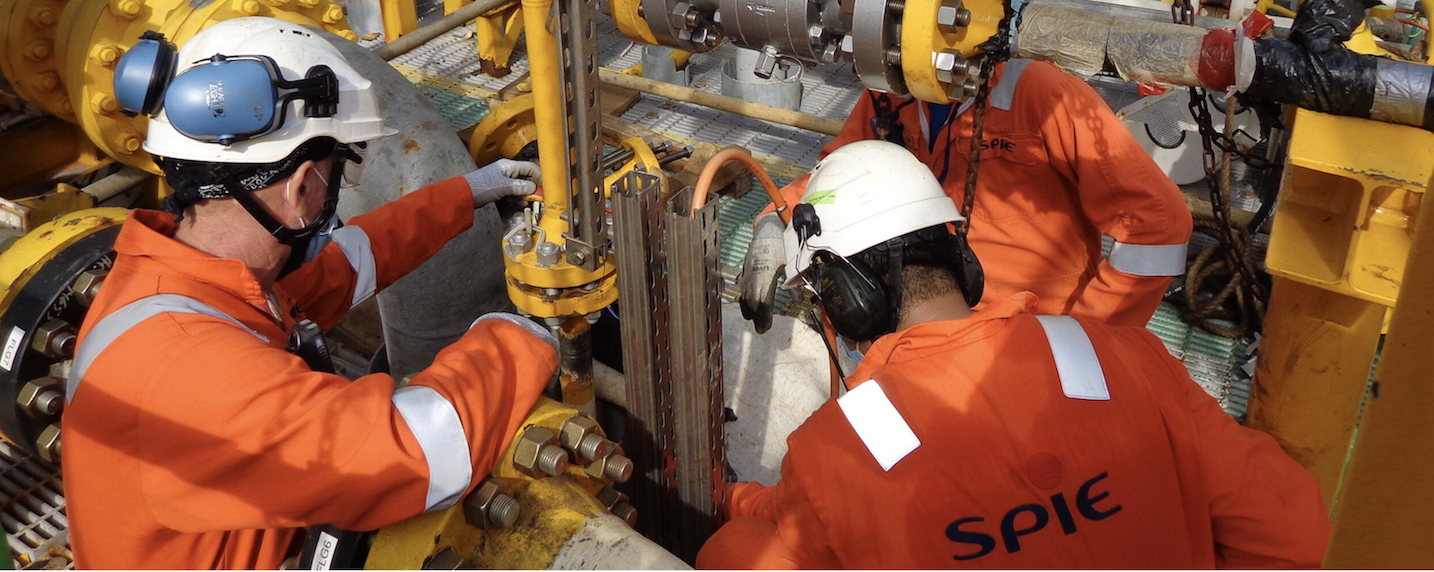 IT for Business · 14 October 2026 Cybersecurity: Spie builds the future of its SOC with AI agents Read the article on the publisher’s website ↗
-
 IT for Business · 13 October 2026 AI in cybersecurity: advantage to attackers… for now Read the article on the publisher’s website ↗
-
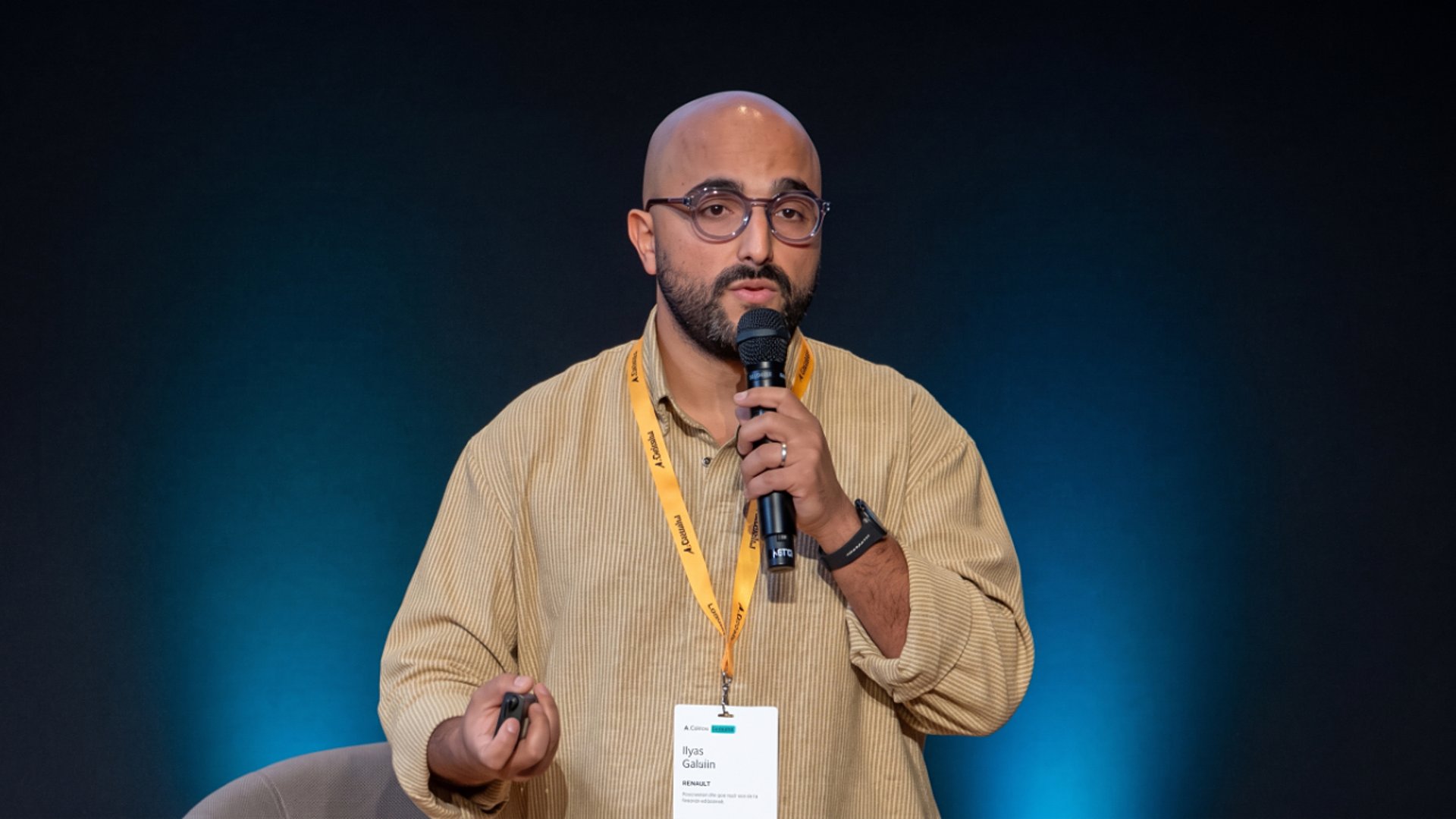 Alliancy · 16 October 2026 Oil shock, margins to recalculate: Renault turns to AI Read the article on the publisher’s website ↗
-
 L'Usine Digitale · 9 October 2026 How the sports brand On used AI agents to migrate its cloud infrastructure Read the article on the publisher’s website ↗
-
 L'Usine Digitale · 13 October 2026 [IA Insider] Meta wants to turn its billions of dollars of investment into (truly) autonomous AI agents Read the article on the publisher’s website ↗
-
 Computing · 14 October 2026 Orange España expands its alliance with Google Cloud to deploy more than 1,000 custom AI agents Read the article on the publisher’s website ↗
- elEconomista · 8 October 2026 Orange España puts more than a thousand AI agents into action after expanding its alliance with Google Read the article on the publisher’s website ↗
Our summaries: Silicon.fr, IT for Business (1, 2), Alliancy, L'Usine Digitale (1, 2), Computing, elEconomista
Results range from modest pilots to measurable gains
Reported results differ sharply by maturity. KPMG’s 2026 study of over 1,000 companies in 20 countries found AI use in finance functions rose from 30 % in 2024 to 75 % in 2026, but only 42 % of organisations have auditable AI processes. In the car industry, Capgemini surveyed 800 executives in twelve countries: 68 % of firms had launched at least one agentic AI pilot, but only 8 % used it intensively, and among 400 carmakers only 38 reported measurable gains above 5 %, rising to 17-19 % for the most advanced. SAP reports Joule Work is used internally by 110,000 employees with 20 % productivity gains in finance, HR and procurement, while Workday’s AI-linked annual recurring revenue reached nearly $600 million, up from $150 million a year earlier.
-
 Compta Online · 15 October 2026 AI and the finance function: 75% of companies are adopting it, according to KPMG Read the article on the publisher’s website ↗
-
 DAF Magazine · 9 October 2026 AI: finance departments move from testing to scaling up Read the article on the publisher’s website ↗
-
 LeMagIT · 13 October 2026 · paywalled Agentic AI in the automotive industry: pilots held back by immature governance (study) Read the article on the publisher’s website ↗
-
 Revista Byte TI · 8 October 2026 The Autonomous Enterprise delivers value to businesses Read the article on the publisher’s website ↗
-
 LeMagIT · 8 October 2026 · paywalled Workday: free AI, until it pays Read the article on the publisher’s website ↗
Our summaries: Compta Online, DAF Magazine, LeMagIT (1, 2), Revista Byte TI
Oversight stays near-total, scale remains limited
Industry associations caution that agentic AI is not yet deployed at scale in large French companies. The AUFO and USF, representing Oracle and SAP users, describe prototypes as rare exceptions among their members, with companies favouring hybrid setups combining generative AI and semi-autonomous agents on narrow domains, always under human control. A separate Wharton-GBK survey of 1,416 employees at US companies with over 1,000 staff found 67 % of departments use agents in some form, but only 28 % have fully integrated AI into core processes, and just 17 % allow autonomous operation with human review. At SPIE, the shift concerns level-1 analysts’ tasks: headcount was not reduced.
-
 LeMagIT · 16 October 2026 · paywalled There is (not yet) any agentic AI in large French companies Read the article on the publisher’s website ↗
-
 Unite.AI · 14 October 2026 The Wharton-GBK report "La ventaja adaptativa" reveals the AI return-on-investment gap in business Read the article on the publisher’s website ↗
- Unite.AI · 14 October 2026 The Wharton–GBK report "L'avantage de l'adaptabilité : qui tire son épingle du jeu grâce à l'IA, et comment ?" reveals the AI ROI gap Read the article on the publisher’s website ↗
- Silicon.fr · 15 October 2026 Sekoia pushes its agentic SOC: what SPIE found when testing it Read the article on the publisher’s website ↗
Our summaries: LeMagIT, Unite.AI (1, 2), Silicon.fr
Security risks keep agents on a short leash
Security concerns limit how far agents are trusted with sensitive systems. According to a Cloud Security Alliance survey cited by Semperis, nearly two-thirds of organisations suffered a security incident linked to AI agents in the past year, 92 % have staff who installed AI on local machines with access to sensitive keys, and 82 % host unmanaged agents. McKinsey found that 97 % of deployed agents carry excessive privileges and that agents outnumber human employees roughly 82 to 1 in a typical company. In the United States, Citi became the latest bank to restrict AI agents’ access to customer accounts, concerned that chatbots could move deposits toward higher-yielding accounts.
-
 Solutions Numériques · 15 October 2026 EXPERT OPINION – AI agents: balancing risks and opportunities Read the article on the publisher’s website ↗
-
 Journal du Net · 14 October 2026 AI agents need more than a human safeguard Read the article on the publisher’s website ↗
- Financial Times · 16 October 2026 Citi becomes the latest US bank to restrict AI agents' access to accounts Read the article on the publisher’s website ↗
Our summaries: Solutions Numériques, Journal du Net, Financial Times
Many headline deployments are still announcements
Several large-scale agent deployments remain at the announcement stage, with full rollout scheduled for later years. Banco Sabadell has signed with T-Systems to use an agentic AI platform across the bank, but plans a "massive deployment" only in 2027. BBVA has joined a joint plan by Meta and Sierra AI to connect AI to businesses, and HCLTech has partnered with Anthropic to build a dedicated unit for agentic AI in complex client environments, both without reported production figures yet. Costs also complicate the picture: Sopra Steria Next describes a "post-CAPEX" era where agent spending varies with token usage, and even at Anthropic, a human administrative assistant role paying around €172,000 a year was advertised in London for tasks the company’s own agents are meant to handle, pending sufficient trust in their judgement.
-
 Expansión · 14 October 2026 · paywalled Sabadell prepares for the leap to AI agents with a large-scale rollout in 2027 Read the article on the publisher’s website ↗
- elEconomista · 13 October 2026 BBVA joins the joint plan of Meta and Sierra AI to connect AI and businesses Read the article on the publisher’s website ↗
- Distributique · 12 October 2026 HCLTech and Anthropic join forces to accelerate agentic AI deployment Read the article on the publisher’s website ↗
-
 IT for Business · 12 October 2026 Post-CAPEX era: Sopra Steria Next calls for tighter control of IT spending Read the article on the publisher’s website ↗
-
 Xataka · 16 October 2026 Anthropic offers 172,000 euros a year for someone to do exactly the work an AI agent should be doing Read the article on the publisher’s website ↗
Our summaries: Expansión, elEconomista, Distributique, IT for Business, Xataka
Articles cited
- Anthropic offers 172,000 euros a year for someone to do exactly the work an AI agent should be doing Xataka, 16 October 2026
- Citi becomes the latest US bank to restrict AI agents' access to accounts Financial Times, 16 October 2026
- Oil shock, margins to recalculate: Renault turns to AI Alliancy, 16 October 2026
- There is (not yet) any agentic AI in large French companies LeMagIT, 16 October 2026
- AI and the finance function: 75% of companies are adopting it, according to KPMG Compta Online, 15 October 2026
- EXPERT OPINION – AI agents: balancing risks and opportunities Solutions Numériques, 15 October 2026
- Sekoia pushes its agentic SOC: what SPIE found when testing it Silicon.fr, 15 October 2026
- Sabadell prepares for the leap to AI agents with a large-scale rollout in 2027 Expansión, 14 October 2026
- Cybersecurity: Spie builds the future of its SOC with AI agents IT for Business, 14 October 2026
- Orange España expands its alliance with Google Cloud to deploy more than 1,000 custom AI agents Computing, 14 October 2026
- AI agents need more than a human safeguard Journal du Net, 14 October 2026
- The Wharton-GBK report "La ventaja adaptativa" reveals the AI return-on-investment gap in business Unite.AI, 14 October 2026
- The Wharton–GBK report "L'avantage de l'adaptabilité : qui tire son épingle du jeu grâce à l'IA, et comment ?" reveals the AI ROI gap Unite.AI, 14 October 2026
- BBVA joins the joint plan of Meta and Sierra AI to connect AI and businesses elEconomista, 13 October 2026
- AI in cybersecurity: advantage to attackers… for now IT for Business, 13 October 2026
- [IA Insider] Meta wants to turn its billions of dollars of investment into (truly) autonomous AI agents L'Usine Digitale, 13 October 2026
- Agentic AI in the automotive industry: pilots held back by immature governance (study) LeMagIT, 13 October 2026
- HCLTech and Anthropic join forces to accelerate agentic AI deployment Distributique, 12 October 2026
- Post-CAPEX era: Sopra Steria Next calls for tighter control of IT spending IT for Business, 12 October 2026
- How the sports brand On used AI agents to migrate its cloud infrastructure L'Usine Digitale, 9 October 2026
- AI: finance departments move from testing to scaling up DAF Magazine, 9 October 2026
- The Autonomous Enterprise delivers value to businesses Revista Byte TI, 8 October 2026
- Workday: free AI, until it pays LeMagIT, 8 October 2026
- Orange España puts more than a thousand AI agents into action after expanding its alliance with Google elEconomista, 8 October 2026
Another question?
Claude searches the articles in the watch and answers you, citing its sources.
Answer written by an AI model (Claude, by Anthropic) from the articles in the watch only: check the figures in the sources. Questions are recorded;learn more.
Method
Text written on 20 October 2026 by an AI model (Claude Sonnet 5, by Anthropic) from 80 AI watch articles on this theme, published between 8 October 2026 and 19 October 2026. Each paragraph links to the entries it draws on, and every number in the text was found in one of these articles before publication. The text is rewritten every week.
Other industries
- AI in manufacturing
- AI at family offices and private wealth advisory firms
- AI in retail and distribution
- AI in transport and logistics
- AI in healthcare
- AI in consulting, law and accounting
- AI in software, IT services and telecoms
- AI in energy and utilities
- AI in construction and real estate
- AI in tourism and hospitality
- AI in media, communication and marketing
- AI in the public sector