AI watch by industry
AI in energy and utilities
Energy and utility companies are using AI for fraud detection, climate control, maintenance and exploration, with measured savings in several documented cases. Yet sector-wide adoption trails other industries: a global survey of industrial companies puts demand for specialised AI in energy and utilities at 48.8 %, the lowest of the sectors measured. Large groups such as TotalEnergies, Iberdrola and Orano are funding dedicated AI partnerships, while regulators in Spain are tightening rules on the water and electricity that data centres consume.
Measured results from narrow AI deployments
Several utilities report measured gains from specific, narrowly scoped AI uses. In Spain, Endesa’s grid subsidiary e-distribución used a machine-learning algorithm that cross-checked consumption data with Instagram footage to uncover illegal connections in sixteen Barcelona restaurants; across its network it detected 72,700 fraud cases in 2025. Airport operator Aena is procuring a ’controllable’ AI system to cut air-conditioning energy use at Madrid-Barajas, with contracted minimum savings rising from 4 % in the first year to 10 % in the fifth, and a mandatory manual fallback mode. Consultancy Klee Group describes a Belgian energy and gas distributor that built a bespoke AI planning tool in a few weeks, saving around a year and a half compared with a standard project. Schneider Electric found that one energy-management architecture it tested cut CO2 emissions by more than 40 %.
-
 Xataka · 9 October 2026 Endesa uncovers electricity fraud in 16 Barcelona restaurants using AI and influencer promotions Read the article on the publisher’s website ↗
-
 Cinco Días · 6 October 2026 Aena seeks a “controllable” AI to reduce energy consumption at Barajas Read the article on the publisher’s website ↗
-
 Alliancy · 9 October 2026 Escalation rules, "Human in the Loop", traceability... What challenges does AI pose for utilities companies? Read the article on the publisher’s website ↗
-
 LeMagIT · 1 October 2026 · paywalled Assessing AI's footprint: Publicis Sapient's open source tool is gaining traction (and it is not alone) Read the article on the publisher’s website ↗
Our summaries: Xataka, Cinco Días, Alliancy, LeMagIT
Adoption trails other industrial sectors
Adoption figures suggest energy and utilities are not leading the industrial shift to AI. A global survey of industrial companies by IFS and The Futurum Group found demand for specialised AI reaches 48.8 % in energy and utilities, the lowest of the sectors measured, against 72.4 % in construction and engineering and 61.9 % in manufacturing. Overall, 58.5 % of the industrial companies surveyed invest at least 10 million dollars a year in AI, AI agents and automation. Separately, AVEVA’s Arti Garg described industrial AI adoption generally as having grown 78 % over two years, a figure describing AVEVA’s own governance work across industry broadly, with a different scope from the IFS sector breakdown, so the two numbers should not be compared directly.


Large energy groups fund dedicated AI partnerships
Some of the largest energy companies are committing significant sums to purpose-built AI. TotalEnergies is investing more than 100 million euros over three years with Mistral AI to build models for oil and gas exploration and reservoir engineering, combining the French group’s near-century of subsurface data with Mistral’s technology in a joint scientific laboratory. Iberdrola has integrated Harvey’s AI technology into its legal and tax services as part of a wider digital transformation. Nuclear fuel group Orano already uses AI in engineering, geosciences and predictive maintenance, and is now developing agentic AI meant to pair staff with AI agents to transfer knowledge within the company.
-
 Alliancy · 15 September 2026 TotalEnergies bets €100 million on Mistral's AI to search for oil Read the article on the publisher’s website ↗
-
 Computing · 2 October 2026 Iberdrola integrates Harvey's AI into its legal and tax services Read the article on the publisher’s website ↗
-
 La Revue du Digital · 22 September 2026 Orano, a nuclear industry leader, organises knowledge exchange between AI agents and employees Read the article on the publisher’s website ↗
Our summaries: Alliancy, Computing, La Revue du Digital
Safety rules and data-centre strain limit rollout
The sector’s criticality brings extra safeguards. Consultants at Klee Group say utilities require traceability, ’human in the loop’ oversight and escalation rules before AI agents can take decisions, citing an incident in which an AI agent caused an Amazon data centre to go offline for several hours. In Spain, the government is preparing tighter rules on data centres, wary of rising water and electricity consumption linked to AI, in a move that could affect Microsoft’s and Amazon’s expansion plans, particularly in Aragón. The International Energy Agency projects that data centres’ global electricity consumption could rise from 485 TWh in 2025 to 950 TWh in 2030.
- Alliancy · 9 October 2026 Escalation rules, "Human in the Loop", traceability... What challenges does AI pose for utilities companies? Read the article on the publisher’s website ↗
-
 El Confidencial · 13 October 2026 Spain curbs the expansion of Microsoft and Amazon: AI is driving up water and electricity consumption Read the article on the publisher’s website ↗
-
 FrenchWeb · 14 October 2026 Jensen Huang's European tour: business, lobbying and investment Read the article on the publisher’s website ↗
Our summaries: Alliancy, El Confidencial, FrenchWeb
Smaller firms get narrower, ready-made tools
Dedicated tools for smaller energy users exist, though documented cases are fewer. In Colombia, a free AI platform backed by an investment of 1,200 million pesos is being made available to more than 30,000 small and medium-sized businesses to check their utility bills for overcharges. The material gathered here does not show similarly ready-made tools, with comparable adoption figures, for small and medium-sized businesses in France or Spain’s energy sector specifically.
-
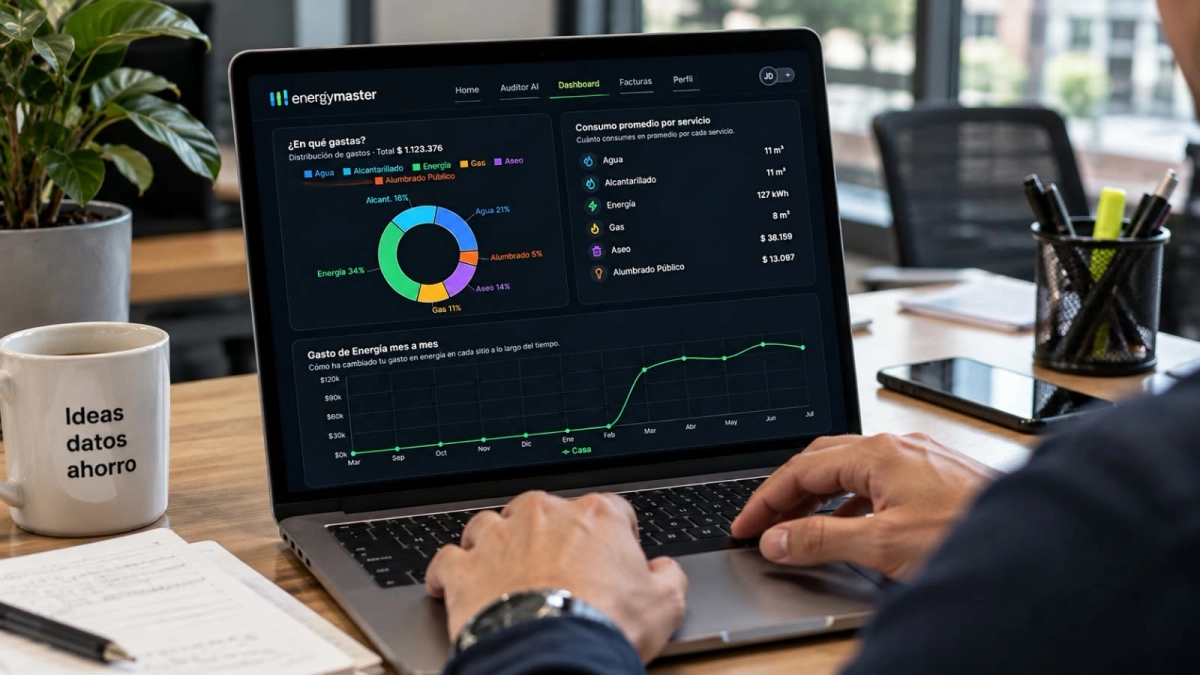 Portafolio · 9 October 2026 A company will invest 1,200 million pesos in a tool to help 30,000 SMEs save on their energy bills Read the article on the publisher’s website ↗
-
 El Tiempo · 9 October 2026 · paywalled More than 30,000 SMEs will be able to access a platform that uses AI to detect possible overcharges on their bills free of charge: how it works Read the article on the publisher’s website ↗
Our summaries: Portafolio, El Tiempo
Articles cited
- Jensen Huang's European tour: business, lobbying and investment FrenchWeb, 14 October 2026
- Spain curbs the expansion of Microsoft and Amazon: AI is driving up water and electricity consumption El Confidencial, 13 October 2026
- A company will invest 1,200 million pesos in a tool to help 30,000 SMEs save on their energy bills Portafolio, 9 October 2026
- Endesa uncovers electricity fraud in 16 Barcelona restaurants using AI and influencer promotions Xataka, 9 October 2026
- More than 30,000 SMEs will be able to access a platform that uses AI to detect possible overcharges on their bills free of charge: how it works El Tiempo, 9 October 2026
- Escalation rules, "Human in the Loop", traceability... What challenges does AI pose for utilities companies? Alliancy, 9 October 2026
- 58.5% of industrial companies already invest more than $10 million a year in AI IT User, 9 October 2026
- AVEVA frames industrial AI: humans in command Brief IA, 8 October 2026
- Aena seeks a “controllable” AI to reduce energy consumption at Barajas Cinco Días, 6 October 2026
- Iberdrola integrates Harvey's AI into its legal and tax services Computing, 2 October 2026
- Assessing AI's footprint: Publicis Sapient's open source tool is gaining traction (and it is not alone) LeMagIT, 1 October 2026
- Orano, a nuclear industry leader, organises knowledge exchange between AI agents and employees La Revue du Digital, 22 September 2026
- TotalEnergies bets €100 million on Mistral's AI to search for oil Alliancy, 15 September 2026
Another question?
Claude searches the articles in the watch and answers you, citing its sources.
Answer written by an AI model (Claude, by Anthropic) from the articles in the watch only: check the figures in the sources. Questions are recorded;learn more.
Method
Text written on 20 October 2026 by an AI model (Claude Sonnet 5, by Anthropic) from 47 AI watch articles on this theme, published between 31 August 2026 and 17 October 2026. Each paragraph links to the entries it draws on, and every number in the text was found in one of these articles before publication. The text is rewritten every week.
Other industries
- AI in manufacturing
- AI at family offices and private wealth advisory firms
- AI in retail and distribution
- AI in transport and logistics
- AI in healthcare
- AI in consulting, law and accounting
- AI in software, IT services and telecoms
- AI in construction and real estate
- AI in tourism and hospitality
- AI in media, communication and marketing
- AI in the public sector