AI watch by industry
AI in education and training
Training providers and education groups are building or buying AI tools for course design, tutoring and careers guidance, with mid-sized organisations such as OMNES Education and l’Étudiant among those reporting measurable use. A Digiforma survey found that 71 % of French training organisations see AI as a major advance, yet École Cube’s 2026 barometer shows that 68.3 % of French professionals still do not know what to learn, and the EU has classified education as a high-risk use under the AI Act from December 2027.
French training-content editors report strong client demand
French training-content editors build on this demand. Teach Up, Didask, Nolej, 360Learning and Rise Up turn raw material such as PDFs, videos and websites into personalised learning paths with quizzes, simulations and coaching. Didask, founded in 2017, raised €10 million in May 2025 and lists Engie, RATP, Suez, Canal+ and L’Oréal among its clients; Nolej works with Bouygues Construction, Ugap and La Poste. According to Teach Up’s founder Nicolas Bourgerie, the aim is to build users’ autonomy with the tools, an approach Teach Up applies from 50 employees upward. A Digiforma survey found that 71 % of French training organisations see AI as a major advance.

Our summaries: Journal du Net
Education groups build their own in-house AI assistants
Mid-sized education groups are building their own assistants. OMNES Education, a 40,000-student, 15-school group, created OMN’IA, a secured multi-LLM assistant developed with start-up TW3 Partners, after appointing a group chief AI officer in September 2025. Media group l’Étudiant launched Ori, a careers-guidance chatbot built with ESN Klee Group on a Mistral model; it had drawn more than 130,000 users since its autumn 2025 launch and reportedly multiplied site browsing fivefold. Telecoms operator Orange is piloting MentorIA, a Socratic tutoring app for secondary pupils developed with Humansdid and BQ, in three schools in the Community of Madrid before any wider rollout.
-
 IT for Business · 2 October 2026 Marc Blangy (OMNES Education): "Students can no longer discover AI when they enter the workplace" Read the article on the publisher’s website ↗
-
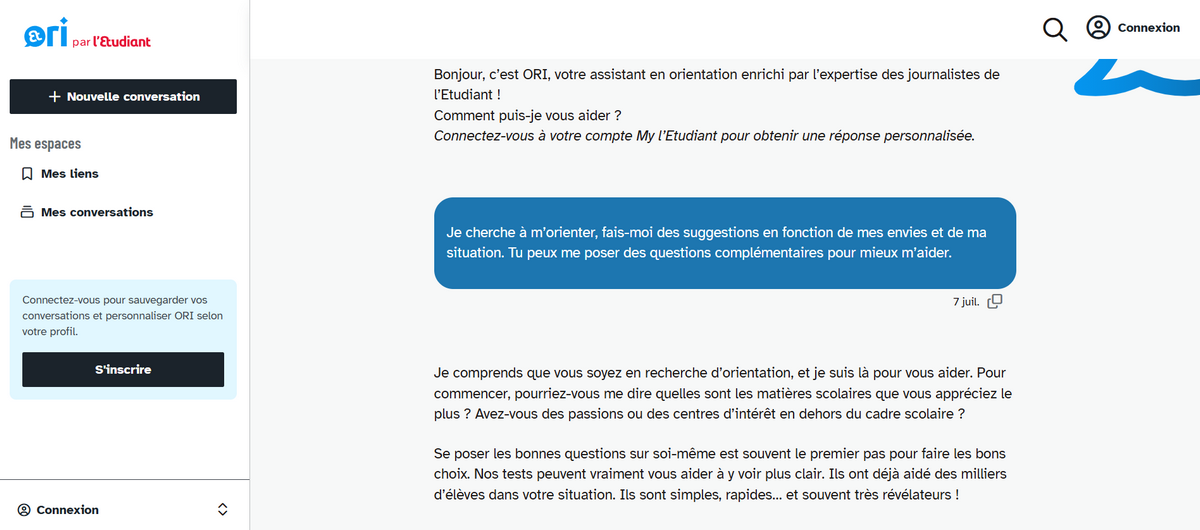 Archimag · 23 September 2026 Ori, l'Étudiant's AI companion specialising in educational guidance Read the article on the publisher’s website ↗
-
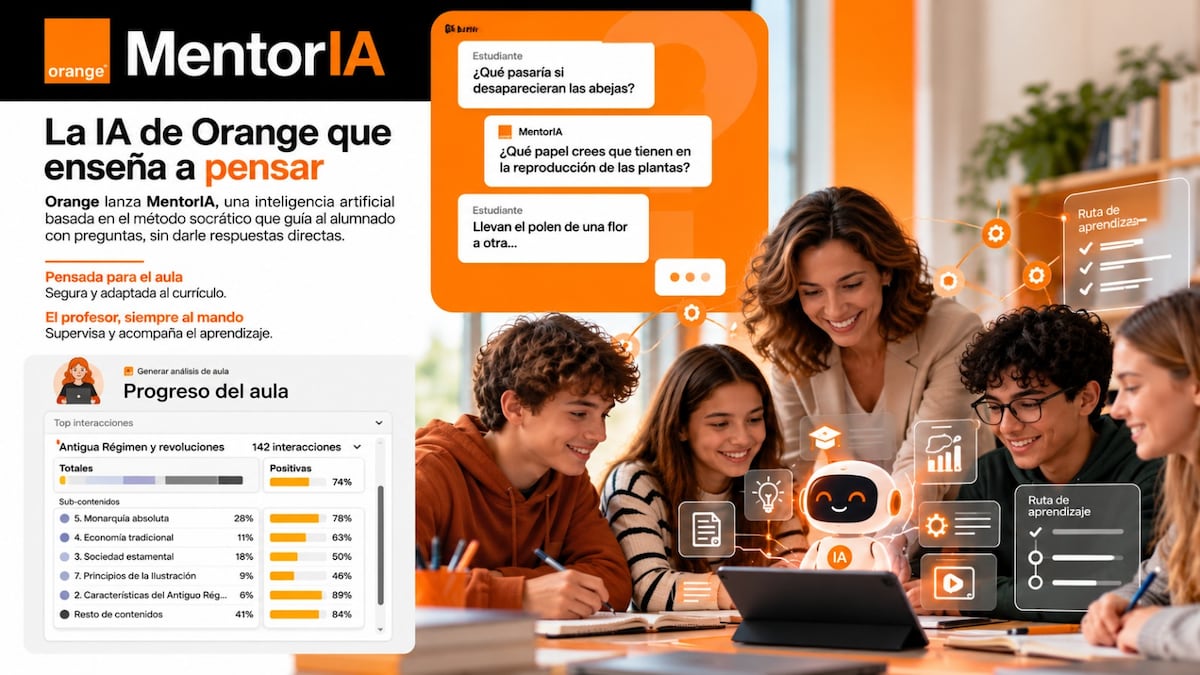 Cinco Días · 23 October 2026 Orange enters the artificial intelligence market with the launch of MentorIA Read the article on the publisher’s website ↗
Our summaries: IT for Business, Archimag, Cinco Días
Education classified as high-risk under the EU AI Act from 2027
Education sits among the activities the EU classifies as high-risk under the AI Act (regulation 2024/1689), alongside HR, credit scoring and biometrics. The digital omnibus 2026/1744, in force since 27 July 2026, pushed the deadline for these high-risk obligations to 2 December 2027, while transparency rules for generated content and chatbots have applied since August 2026. Penalties for prohibited practices can reach €35 million or 7 % of worldwide turnover; breaches of provider, deployer and transparency duties can reach €15 million or 3 %. France is still finalising which authorities, such as the CNIL, DGCCRF and Arcom, will enforce the rules, while Germany has already designated its Bundesnetzagentur.

Our summaries: ActuIA
Training providers face a skills gap within their own workforce
Training providers face a gap within their own workforce. The École Cube’s 2026 barometer of 539 French professionals found that practising AI lowers fear of being overtaken by the tool, from 32.8 % among non-users to 9.9 % among self-declared experts, while fear of replacement stayed closer between the two groups, at 16.4 % and 9.9 %, and 68.3 % said they did not know what to learn. A Harvard Business Review study of more than 1,000 US employees found that more than half of those in education, alongside the public sector and manufacturing, said their organisation’s messaging on AI was unclear or absent, compared with clearer signals in tech and finance.


Some business schools face a threat to their revenue model
Guillaume Coqueret, a researcher and lecturer at EM Lyon, told Le Monde that artificial intelligence’s automation of junior, entry-level roles undermines the return graduates can expect on the cost of a business-school degree. He described the resulting risk to the economic model of part of the sector as ’quasi-existential’, a warning he directed at management schools, whose fees depend on that graduate return on investment.

Our summaries: Le Monde
Adoption among libraries splits sharply by institution size
Adoption also splits by size within comparable, non-corporate education institutions. A survey of 698 US university and public library directors by the OCLC found 24 % using AI daily, 40 % occasionally and 36 % rarely or never, in March 2026. The gap by size was wide: 67 % of research-library directors used AI daily, against 14 % at small public libraries, where 26 % did not use it at all. Attitudes were cautious across the board: 39 % described themselves as equally enthusiastic and concerned, and 33 % more concerned than enthusiastic, with time saved cited as the main benefit.

Our summaries: Archimag
Articles cited
- The better they master AI, the more they question their profession Maddyness, 19 November 2026
- “AI poses a near-existential risk to the business model of some management schools” Le Monde, 13 November 2026
- Orange enters the artificial intelligence market with the launch of MentorIA Cinco Días, 23 October 2026
- How Executives Talk About AI Predicts Its Adoption Infobae, 9 October 2026
- AI Act: obligations in force and postponements under omnibus 2026/1744 ActuIA, 6 October 2026
- Marc Blangy (OMNES Education): "Students can no longer discover AI when they enter the workplace" IT for Business, 2 October 2026
- Ori, l'Étudiant's AI companion specialising in educational guidance Archimag, 23 September 2026
- How educational AI is shaking up the professional training market Journal du Net, 18 September 2026
- In the United States, librarians take a measured approach to AI Archimag, 15 September 2026
Another question?
Claude searches the articles in the watch and answers you, citing its sources.
Answer written by an AI model (Claude, by Anthropic) from the articles in the watch only: check the figures in the sources. Questions are recorded;learn more.
Method
Text written on 23 November 2026 by an AI model (Claude Sonnet 5, by Anthropic) from 31 AI watch articles on this theme, published between 3 September 2026 and 21 November 2026. Each paragraph links to the entries it draws on, and every number in the text was found in one of these articles before publication. The text is rewritten every week.
Other industries
- AI in manufacturing
- AI at family offices and private wealth advisory firms
- AI in retail and distribution
- AI in transport and logistics
- AI in healthcare
- AI in consulting, law and accounting
- AI in software, IT services and telecoms
- AI in energy and utilities
- AI in agriculture and food
- AI in construction and real estate
- AI in tourism and hospitality
- AI in media, communication and marketing
- AI in the public sector