AI watch by industry
AI in agriculture and food
In agriculture and food, artificial intelligence is moving from quality-control cameras to livestock monitoring and field robotics, with measurable results reported at individual sites. Sector-wide adoption, however, remains below the average for other industries: around 18 % of French agricultural businesses and close to 30 % of Spanish agriculture and construction firms reported using AI in 2026, according to national surveys. Specialists describe a food-processing and food-safety landscape still held back by cost, fragmented data and an unsettled regulatory picture for AI specifically.
Robots and computer vision track crops and livestock
In Extremadura, Spain, the AGRHOUND project, led by the agri-food technology centre CTAEX, is testing a four-legged robot carrying AI sensors that moves autonomously through vineyards and berry tunnels, producing real-time maps of fruit ripeness. Trials run at Bodegas Familiares Matarromera and Social Berries, with EU (FEADER) and Spanish agriculture ministry funding until 2029; project lead Luis Muñoz says the aim is to cover more land in less time, not replace workers. Separately, Spanish startup DeepFarm built PAXTOR, a camera and computer-vision system that watches cattle continuously and claims to flag disease-related anomalies up to 72 hours before a farmer would notice. The company’s turning point came when TernaBeef, a 1,500-head farm, adopted the tool.
-
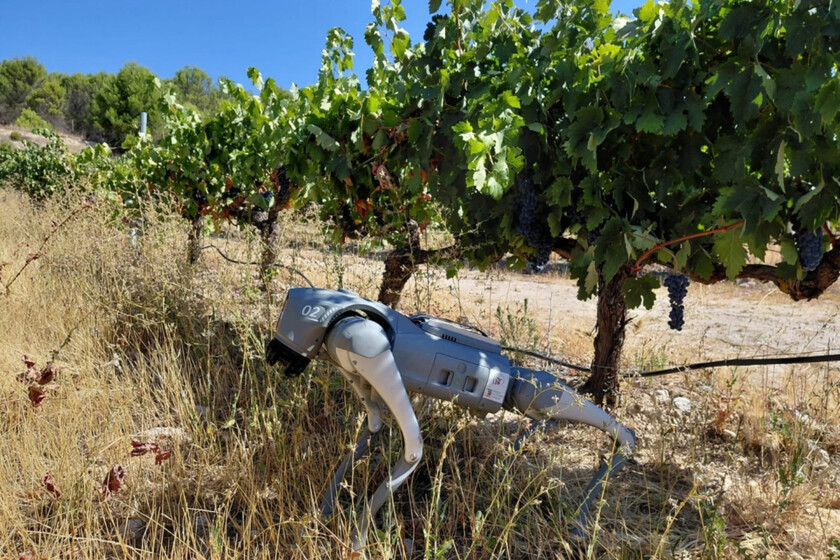 Xataka · 19 October 2026 An AI-guided robot dog is already patrolling vineyards in Extremadura Read the article on the publisher’s website ↗
-
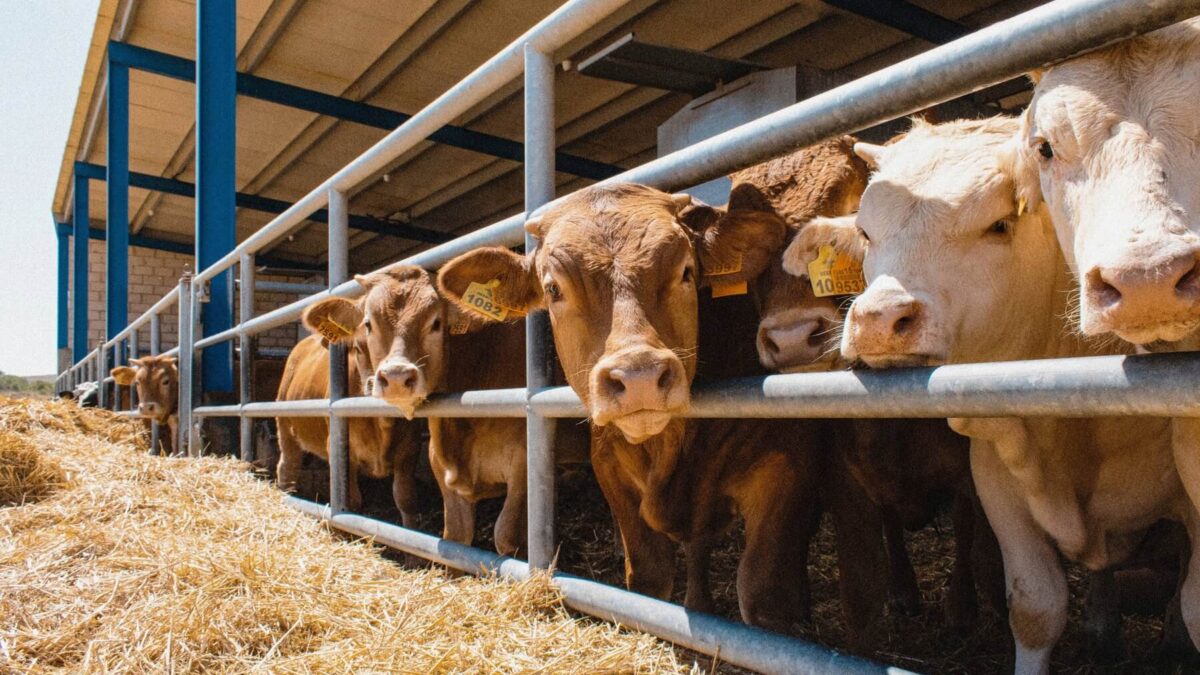 Emprendedores · 15 October 2026 PAXTOR, the digital stockman that monitors livestock around the clock with AI and computer vision Read the article on the publisher’s website ↗
Our summaries: Xataka, Emprendedores
Mid-sized food and wine businesses report concrete time savings
At the Materne group’s Babynov plant in Courmelles, France, AI-powered cameras from Psycle Research now inspect metal baby-food tins for dents and deformities, ejecting faulty units without stopping the line; Psycle Research reports a 99.97 % performance rate, and Babynov is considering extending the system to other checkpoints. In Spain, Nodus deployed three "Digital Workers" at Olimpfruit, a 30-employee fruit company, to handle order management, seasonal-worker traceability and stock, reducing errors and improving coordination between teams. In France, Bordeaux-based Reflekt Lab built tools for wine businesses: a dashboard for ACL saves three to four days of manual consolidation per month, and Domaine Gayda replaced a 90-tab spreadsheet with a single pricing tool.
-
 Agro Media · 17 September 2026 Case study: How Babynov automated the inspection of its metal tins using artificial intelligence Read the article on the publisher’s website ↗
-
 El Español · 5 October 2026 AI gives SMEs a new opportunity to compete with the capacity of large companies Read the article on the publisher’s website ↗
-
 El Confidencial · 5 October 2026 AI gives SMEs a new opportunity to compete with the capacity of large companies Read the article on the publisher’s website ↗
- France Num · 23 October 2026 Reflekt Lab Read the article on the publisher’s website ↗
Our summaries: Agro Media, El Español, El Confidencial, France Num
Agriculture still trails most sectors on AI adoption
Adoption in agriculture lags most other sectors on both sides of the border. In France, the France Num 2026 barometer, based on 9,655 businesses, found 18 % of agricultural firms using at least one AI solution in spring 2026, against 40 % for all small and medium businesses and 72 % for the digital sector. In Spain, the Banco de España, drawing on its business survey and integrated balance-sheet data, put agriculture and construction together at close to 30 % penetration in the first quarter of 2026, nearly 20 percentage points higher than two years earlier, still behind the 60 % recorded in information and communication and the roughly 70 % among large companies across all sectors.
-
 ActuIA · 1 October 2026 40% of micro-businesses and SMEs use AI, but only 19% pay for it Read the article on the publisher’s website ↗
-
 Brief IA · 30 September 2026 Micro-businesses and SMEs in 2026: AI is advancing but remains the lowest priority Read the article on the publisher’s website ↗
-
 Forbes España · 28 October 2026 AI use in SMEs has doubled since 2024 and reached 35%, according to the Banco de España Read the article on the publisher’s website ↗
Our summaries: ActuIA, Brief IA, Forbes España
Scaling past the pilot stage remains the main obstacle
Rockwell Automation studied why food-and-beverage companies struggle to move AI projects from pilot tests to quantifiable business results. Food-safety consultant Willette M. Crawford, co-founder of Katalyst Agricultural Solutions, says AI can speed up the analysis of scattered data but does not detect pathogens itself. She points to the absence of a comprehensive regulatory framework for AI in food safety, a fragmented global supply chain, and tool costs that keep adoption concentrated among larger companies while smaller producers are held back by price and implementation time. She adds that any benefit depends first on data already being digitised.
- infoPLC.net · 29 October 2026 Moving beyond the pilot phase with AI in food and beverage (F&B) Read the article on the publisher’s website ↗
-
 Brief IA · 8 September 2026 AI and food safety: promises and obstacles Read the article on the publisher’s website ↗
Our summaries: infoPLC.net, Brief IA
Large groups formalise AI roles; public funding targets agri-food
Some larger groups are formalising AI governance. French dairy and cheese group Bel, which reported €3.83 billion in revenue in 2025 across 11,000 employees, appointed Sophie Lambert-Nicod as Chief AI Officer alongside her existing transformation role; no timetable or targets have been announced. In Spain, the regional innovation agency Ivace+i has channelled close to €200 million between 2021 and 2027 into strategic technologies including AI, under the EU’s STEP strategy, naming agri-food as one of three priority sectors alongside health and tourism; funded projects favour consortia that pair SMEs with larger partners.
-
 Alliancy · 28 October 2026 Bel appoints Sophie Lambert-Nicod to implement its AI strategy Read the article on the publisher’s website ↗
-
 El Ecosistema Startup · 5 October 2026 Ivace+i commits $235M to AI and strategic technologies in Valencia Read the article on the publisher’s website ↗
Our summaries: Alliancy, El Ecosistema Startup
Articles cited
- Moving beyond the pilot phase with AI in food and beverage (F&B) infoPLC.net, 29 October 2026
- Bel appoints Sophie Lambert-Nicod to implement its AI strategy Alliancy, 28 October 2026
- AI use in SMEs has doubled since 2024 and reached 35%, according to the Banco de España Forbes España, 28 October 2026
- Reflekt Lab France Num, 23 October 2026
- An AI-guided robot dog is already patrolling vineyards in Extremadura Xataka, 19 October 2026
- PAXTOR, the digital stockman that monitors livestock around the clock with AI and computer vision Emprendedores, 15 October 2026
- AI gives SMEs a new opportunity to compete with the capacity of large companies El Español, 5 October 2026
- AI gives SMEs a new opportunity to compete with the capacity of large companies El Confidencial, 5 October 2026
- Ivace+i commits $235M to AI and strategic technologies in Valencia El Ecosistema Startup, 5 October 2026
- 40% of micro-businesses and SMEs use AI, but only 19% pay for it ActuIA, 1 October 2026
- Micro-businesses and SMEs in 2026: AI is advancing but remains the lowest priority Brief IA, 30 September 2026
- Case study: How Babynov automated the inspection of its metal tins using artificial intelligence Agro Media, 17 September 2026
- AI and food safety: promises and obstacles Brief IA, 8 September 2026
Another question?
Claude searches the articles in the watch and answers you, citing its sources.
Answer written by an AI model (Claude, by Anthropic) from the articles in the watch only: check the figures in the sources. Questions are recorded;learn more.
Method
Text written on 2 November 2026 by an AI model (Claude Sonnet 5, by Anthropic) from 36 AI watch articles on this theme, published between 8 September 2026 and 29 October 2026. Each paragraph links to the entries it draws on, and every number in the text was found in one of these articles before publication. The text is rewritten every week.
Other industries
- AI in manufacturing
- AI at family offices and private wealth advisory firms
- AI in retail and distribution
- AI in transport and logistics
- AI in healthcare
- AI in consulting, law and accounting
- AI in software, IT services and telecoms
- AI in energy and utilities
- AI in construction and real estate
- AI in tourism and hospitality
- AI in media, communication and marketing
- AI in education and training
- AI in the public sector